Declutter Books Without Regret: A Calm, Practical Way to Let Go and Keep What Matters
A gentle, realistic approach to sorting books when you’re attached, overwhelmed, or tired of “all at once” advice.
If you’re here because your shelves feel heavy, you’re not alone. Books carry more than paper. They hold seasons of your life, versions of you, and small promises you made to yourself—about who you’d become, what you’d learn, what you’d finally have time for.
This isn’t a push to “get rid of most of them.” It’s also not a perfection project. It’s a way to make the pile feel workable again, without turning it into a test of discipline or taste.
A lot of people get stuck because book decluttering feels like it asks one big question: Who are you, really? And that’s a lot to answer while standing in front of a shelf.
So we’ll make it smaller.
For now, you only need one goal: reduce the feeling of pressure around your books. That pressure can show up as crowded shelves, stacks on the floor, or the quiet guilt of unread spines.
You don’t need to decide your “final library” today. You don’t even need to finish a category. You’re allowed to handle books the same way you handle anything tender: slowly, in good light, with room to change your mind.
Notice what kind of clutter your books are creating
Once you’ve given yourself permission to go gently, it helps to name what’s actually bothering you. With books, the discomfort often isn’t the number. It’s the way they’re behaving in your space.
Some book clutter is purely physical: shelves bowing, piles forming, corners collecting “later” stacks. But another kind is mental. It’s the feeling of being watched by your own good intentions every time you pass a shelf.
This is usually where people try to solve the problem with a rule. “Only keep what you’ve read.” “Only keep what sparks joy.” Rules can be helpful, but books don’t always cooperate. A book can be unread and still important. Another can be read and still feel like a weight.
Instead of rules, start with a simple observation: What is this collection asking from me right now? Is it asking for more space? Fewer decisions? Less guilt? Easier access to the books you actually use?
When you can name the pressure, you can choose a matching kind of relief. If the issue is overflow, you might focus on volume. If the issue is emotional drag, you might focus on the books that carry the most “I should.”
This keeps you from decluttering blindly. You’re responding to a real need, not performing tidiness.
Separate “keeping” from “deciding” so your brain can breathe
A quiet trick with book decluttering is to stop asking yourself to decide everything in the same moment. For many people, the hardest part isn’t letting go. It’s being forced to judge every book while also trying to stay calm.
So split the work into two different energies: keeping and deciding.
“Keeping” is simple. It’s the easy yes books. The ones you reach for, reference, reread, or feel immediately glad to own. Let those books be straightforward. They don’t need a debate.
“Deciding” is a different mood. It needs time, space, and fewer interruptions. This is where the sentimental books live. The aspirational books. The books you paid too much for. The ones that make you feel like a person with an unfinished assignment.
If you try to do “deciding” at the shelf, you’re doing it in a tight space, usually while standing, often while already overwhelmed. That’s not a fair setup.
Instead, create a small “deciding zone.” A tote, a box, a single stack in a corner. Not a mountain. Just a contained place where undecided books can wait without taking over your room.
This way, your shelves can start to feel lighter even before you’ve made the harder calls.
Use three gentle lanes that don’t require certainty
Once you’ve separated easy keeps from harder decisions, it helps to give your brain a structure that doesn’t demand instant certainty. This is where simple lanes work well—because they hold progress without forcing a verdict.
Try three lanes:
- Stay (for now): books you’re comfortable keeping without overthinking
- Go (with ease): books you can release without a knot in your stomach
- Pause: books that make you hesitate, even if you don’t know why yet
The “for now” part matters. It keeps you from turning this into a life sentence. You’re allowed to keep a book through one season and feel differently in the next.
The “go with ease” lane is also important, because it builds momentum without drama. Some books are simply finished chapters: outdated reference guides, duplicates, novels you didn’t enjoy, formats you don’t like reading anymore. Let those be uncomplicated.
Then there’s “pause,” which is often the real work. But “pause” doesn’t mean you failed to decide. It means you respected the fact that your attachment is information. Sometimes the hesitation is about identity (“I’m the kind of person who reads this”), sometimes it’s about memory, and sometimes it’s just fatigue.
Keeping a pause lane keeps you honest without trapping you. It turns the hardest part into something you can revisit with a clearer head.
Release guilt books first, even if you keep a lot
As you move through your lanes, you may notice a certain type of book that creates a specific kind of tension. These are the guilt books. They aren’t always bad books. They’re just books that ask something from you each time you see them.
They might be self-improvement titles you bought during a hard year. A “classic” you think you should read. A parenting book from a phase you’ve outgrown. A craft book for a hobby you no longer want to restart.
What makes them guilt books is the emotional invoice attached to the spine.
This is usually where people get stuck because they think letting go means admitting something. That they wasted money, wasted time, or changed too much.
But releasing a guilt book can also be a quiet form of honesty. It can mean, “That version of me had a reason,” and also, “I don’t need to carry this reminder in my living room.”
If you want a low-drama place to begin, start here. Guilt books often create more mental clutter than physical clutter, so removing even a small stack can change the feel of a room quickly.
You’re not erasing your effort. You’re unhooking your space from an old expectation. And that’s a very different thing.
Let space, not numbers, guide your decisions
After the first wave of sorting, it’s common to look at what’s left and feel unsure again. The shelves may still be full, and the old question creeps back in: Is this enough?
This is where many people reach for numbers. A shelf limit. A box count. A percentage to remove. But with books, numbers often create more tension than clarity. They turn a relationship question into a math problem.
Instead, let space do the talking.
Look at how your shelves feel now, not how they compare to an ideal. Are books packed so tightly you have to force them back in? Are there horizontal stacks creeping in because there’s nowhere else to put them? Or do the shelves feel settled, even if they’re full?
Space is honest. It shows you what your home can comfortably hold without asking you to justify each choice.
If you notice strain—bowed shelves, crowded edges, visual noise—that’s useful information. It’s not a failure. It’s feedback. It tells you the collection wants to be a little smaller, or spread out differently.
This approach keeps the focus on your lived environment, not an abstract standard. You’re not trying to win at decluttering. You’re adjusting the relationship between objects and the room they live in.
When space is the guide, decisions tend to soften. You’re responding to reality, not pushing against it.
Be honest about how you read now, not how you used to
One of the quiet reasons book clutter builds is that reading habits change more than we expect. What fit your life ten years ago may not fit the way your days move now.
This isn’t about reading less or more. It’s about reading differently.
Some people no longer have the attention for dense nonfiction. Others read almost entirely on screens now. Some only reread comfort books during certain seasons. None of this means the old books were a mistake. It just means your rhythms shifted.
When you’re decluttering books, it helps to gently ask: How do I actually read these days? Not how you wish you read. Not how you think a “reader” reads. Just the truth of your evenings, your energy, your focus.
A book that doesn’t match your current reading life can still be meaningful—but it may not need to live on your main shelves. Or in your home at all.
This isn’t about abandoning your identity. It’s about updating it. Letting your shelves reflect the present version of you can be surprisingly relieving.
You’re allowed to keep books for who you are now, even if that means releasing books that belonged to a different pace or season.

Handle sentimental books separately, on purpose
Sentimental books ask for a different kind of attention. Mixing them in with everyday decisions often makes everything feel heavier than it needs to be.
These might be childhood favorites, gifted books with inscriptions, inherited collections, or books tied to a person or place you miss. The value here isn’t informational. It’s emotional.
Treating sentimental books like ordinary clutter creates unnecessary pressure. You end up trying to be practical about something that isn’t practical at all.
Instead, set them aside intentionally. Not to decide immediately, but to acknowledge that they deserve a slower pace. This separation alone can reduce a lot of friction.
When you do come back to them, notice what you’re really keeping. Often it’s not the entire book. It’s the memory, the connection, the moment in time.
Sometimes one or two representative books can carry that meaning just as well as a full shelf. Other times, keeping the whole group feels right. There’s no universal rule here.
The key is that sentimental books don’t need to justify their presence by usefulness. They just need to earn their place emotionally—and within the space you actually have.
Let duplicates and formats quietly exit first
If you’re feeling stuck again, look for decisions that require the least emotional effort. With books, this often means duplicates or formats you don’t enjoy using.
Multiple copies of the same title, older editions you no longer reference, or books you own in both physical and digital form can usually go without much debate. These decisions don’t touch identity or memory. They’re simply about redundancy.
The same goes for formats. Maybe you don’t enjoy hardcovers anymore. Maybe mass-market paperbacks are hard on your eyes. Maybe you’ve realized audiobooks work better for certain topics.
Releasing books based on format preference isn’t shallow. It’s practical. It aligns your shelves with how you actually consume information and stories.
This kind of decluttering builds confidence because it reminds you that not every decision has to be emotionally charged. Some choices are just maintenance.
As these books leave, you may notice breathing room appear without having to confront the harder categories yet. That space isn’t just physical. It gives your mind a signal that progress can be calm and uncomplicated.
Adjust shelves instead of forcing decisions
Sometimes the discomfort around books isn’t really about the books themselves. It’s about how they’re arranged.
Before pushing yourself to let go of more, consider whether the setup is working against you. Overfilled shelves, mismatched heights, or books stored where you never spend time can make even a reasonable collection feel overwhelming.
A small adjustment—spacing books out, moving a category to a more logical room, lowering a shelf so books aren’t stacked—can change how you experience the whole collection.
This matters because decluttering isn’t only subtractive. It’s also about making what remains easier to live with.
When shelves feel intentional, it’s often clearer which books truly belong and which are just filling gaps. You may find that some decisions resolve themselves once the environment supports them.
This step also honors the idea that you don’t have to earn comfort by giving things up. Sometimes clarity comes from rearranging, not removing.
Let the shelves work with you. They can be part of the solution, not just the container for the problem.
Give unread books a realistic second look
Unread books often carry more weight than read ones. They sit there quietly, but they tend to speak the loudest. They represent time you meant to have, focus you hoped would return, or a version of yourself that felt closer when you bought them.
Before you decide what to do with them, it helps to slow this part down.
Instead of asking, “Will I ever read this?” try something gentler: Does this still fit the way my curiosity works now? Some unread books stay appealing. Others feel distant the moment you really look at them.
Pay attention to your body here. If picking up a book brings interest or calm, that’s information. If it brings a sense of obligation or quiet pressure, that’s information too.
You’re not required to keep books as proof of good intentions. An unread book isn’t a promise you failed to keep. It’s simply a snapshot of who you were when you chose it.
Some people like to keep a small, intentional unread stack—a place for genuine next reads. Everything else can be reconsidered without drama. This keeps possibility without letting it sprawl.
Unread books don’t need to be punished or defended. They just need to be seen clearly, in the context of your current life.
Let book size and weight inform what stays accessible
Physical comfort matters more than we often admit. Heavy art books, oversized volumes, and thick hardcovers can quietly make a space feel harder to manage, especially if your energy is limited.
This doesn’t mean these books can’t stay. It just means their placement matters.
If lifting, dusting, or rearranging certain books feels taxing, notice that without judgment. Your home should support you, not require extra effort just to maintain it.
Sometimes the solution is as simple as relocating heavier books to lower shelves, or grouping large volumes together so they feel intentional rather than awkward. Other times, it brings up a question about whether a book needs to be owned physically at all.
This is especially relevant during life transitions—changes in health, time, or capacity. What felt manageable before may not now, and that’s allowed.
Letting physical ease factor into your decisions isn’t giving up. It’s adjusting with honesty. When shelves feel easier to interact with, you’re more likely to enjoy what’s there.
Books are meant to be part of your life, not something you brace yourself around.
Pay attention to which books you protect without noticing
As you sort, you may notice that some books seem to “survive” every round without much thought. You move them aside automatically. You rarely question them.
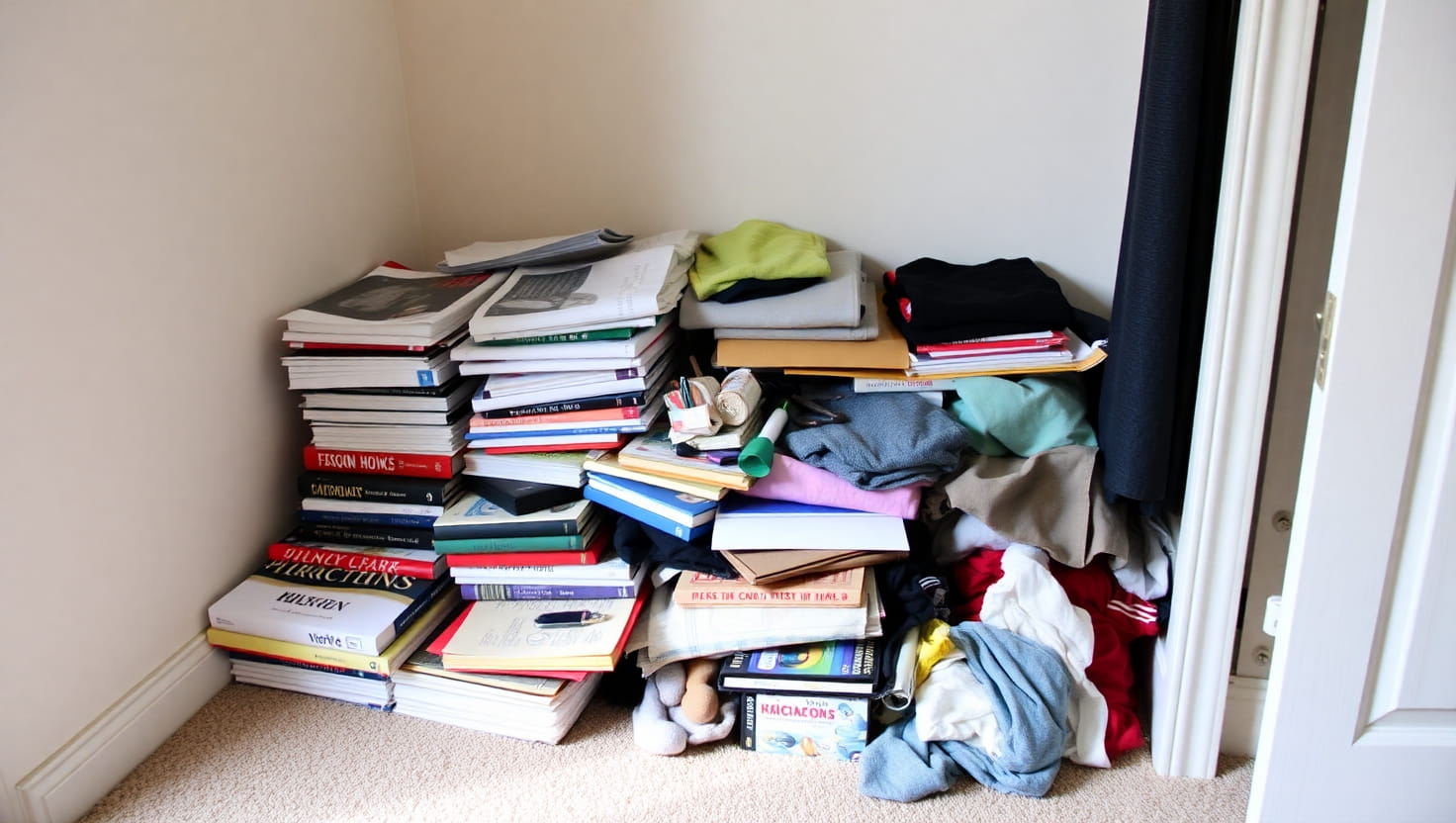
This is useful to notice.
These books often tell you more about your values than the ones you debate. They might reflect comfort, familiarity, or a deep sense of self. They might simply belong.
You don’t need to analyze this too much. Just let it inform you. If certain books are consistently protected, that’s a sign they’re doing their job quietly.
At the same time, watch for books that you keep only because you’ve always kept them. Habit can look a lot like attachment, but it feels different in the body. Habit feels flat. Attachment feels warm or anchored.
This distinction helps later, when you’re deciding what deserves limited space. Books that feel actively chosen often earn their place more easily than books that are just part of the background.
You’re not trying to curate a perfect collection. You’re learning which books already feel like home.
Allow your collection to be uneven on purpose
Many people feel subtle pressure for their shelves to look balanced—equal rows, matching genres, a sense of completeness. But real reading lives are uneven. They reflect curiosity, phases, and pauses.
It’s okay if one shelf is dense and another is sparse. It’s okay if you have many books on one subject and very few on another. Uniformity isn’t a requirement.
Trying to make your collection look a certain way often leads to keeping books that don’t truly matter to you, just to fill a visual gap.
Instead, let the unevenness stand. Let your shelves show where your interest has lingered and where it has moved on. This kind of honesty can feel surprisingly grounding.
When you stop forcing balance, it becomes easier to release books that were only there to round things out. Your space starts to reflect lived experience instead of an imagined ideal.
Shelves don’t need symmetry to be settled. They need truth.
Leave some decisions unfinished on purpose
As you near the end of a round of decluttering, it can be tempting to push for closure. To finish strong. To make every decision final.
With books, that urge often backfires.
It’s okay—and often wise—to leave a small portion undecided. A shelf, a box, a stack that you consciously choose not to resolve yet. This isn’t avoidance. It’s pacing.
Some decisions need distance. Time living with a lighter shelf. Time noticing what you reach for and what you don’t miss. That information only comes after space is created.
Leaving things unfinished keeps the process humane. It signals to your nervous system that this isn’t a one-shot test. You can return later, with more clarity and less pressure.
Decluttering books works best when it stays flexible. You’re not closing a chapter forever. You’re adjusting how it sits in your life right now.
And that’s enough for this moment.
When decluttering starts to feel different
If you’ve noticed that this approach feels quieter than most advice, that’s not an accident. For many people, decluttering only sticks when it stops being a project and starts becoming something gentler—something that works with their energy instead of against it.
Books are often where this shift becomes visible. Not because they’re harder, but because they show us how much timing and self-trust matter. When you don’t force momentum, you start to recognize patterns that repeat across the rest of your home.
That’s usually the moment when decluttering stops feeling temporary—and begins to settle in as a way of living that doesn’t need constant restarting.