Declutter Makeup Without Regret: A Calm, Practical Reset for Your Everyday Routine
A gentle way to sort, reduce, and keep only what still fits your face, your habits, and your season of life.
Makeup clutter has a particular kind of weight to it. It’s small, so it hides easily. It’s expensive enough to feel “wasteful” to let go. And it’s tied to how you see yourself, which means every decision can feel louder than it needs to.
This isn’t about creating a perfect capsule collection. It’s also not about learning a new system you have to maintain forever. Think of this as a quiet reset that makes the next morning easier on your brain.
If you’ve been avoiding your makeup area because it feels messy or confusing, that makes sense. A crowded drawer turns “get ready” into a string of tiny decisions. And tiny decisions add up fast when you’re already tired.
For now, the goal is simple: let the makeup you actually use become easier to find, and let the rest stop taking up prime space.
You don’t need to be ruthless. You don’t need to finish in one sitting. You’re just giving your current routine a little more room to breathe.
Why makeup clutter feels so personal
Decluttering makeup often pokes at identity in a way other categories don’t. A lipstick isn’t just a lipstick. It can be a version of you, a memory, a hopeful purchase, or a “one day” mood you’ve been waiting to become.
That’s why the usual advice to “toss anything you don’t love” can feel sharp. With makeup, liking something isn’t always the point. Sometimes it represents effort you meant to make, confidence you wanted, or a phase you miss.
It also helps to name a quieter truth: most of us buy makeup in bursts. Stress, boredom, a life change, a sale, a new trend. Then our real routine stays fairly steady, and the products quietly stack up around it.
If this is you, nothing is wrong. It’s just a mismatch between purchasing energy and daily-life energy.
So instead of asking, “Do I deserve to keep this?” try a gentler question: “Does this work with who I am on a normal day?”
That one tends to bring less drama. And it still leads to clear decisions.
Start where you use it, not where you store it
Makeup decluttering goes smoother when you begin with the reality of your habits. Not your storage. Not your container plan. Just your actual use.
Before you sort anything, take a moment to picture a normal week. How many days do you wear makeup? How much time do you usually have? What do you reach for when you’re not trying to be “extra,” just presentable?
That picture becomes your anchor. It keeps you from building a collection for a fantasy schedule.
If it helps, choose one “get-ready zone” as your home base, even if it’s temporary. A bathroom counter. A desk corner. A small tray. The point is to see what you use when it’s right in front of you.
Then gather makeup from the surrounding areas and bring it into the same general space. Not to create a mountain, just to stop the slow leaking of products into random drawers.
A few places makeup tends to hide:
- purses and travel bags
- nightstands and desk drawers
- coat pockets and car consoles
When everything is within reach, patterns show up quickly. And once you can see the patterns, you don’t have to force decisions. They start making themselves.
The quick safety pass that lowers decision fatigue
Makeup decisions get harder when you’re also trying to judge safety and hygiene in the same moment. A quick, calm “safety pass” first can lower the mental load for everything that comes after.
This isn’t about memorizing expiration charts. It’s about removing the obvious question marks so you can focus on preference and use.
As you handle each item, look for a few simple signals:
Texture changed (watery, chunky, gritty). Smell changed (crayon-like, sour, “off”). Packaging is messy (leaking, crusted, hard to close).
Mascara and liquid eyeliner are worth extra caution because they sit close to your eyes and tend to collect bacteria faster than powders. If you can’t remember when you opened them and they’re not performing well anymore, that’s already an answer.
For powders, you can often sanitize the surface and keep going, as long as they still apply normally and don’t irritate your skin. For creams, pay closer attention to smell and texture, especially if you dip fingers into the product.
The emotional benefit of this step is bigger than it looks. Once the “Is this even okay?” question is handled, the rest becomes simpler. You’re no longer negotiating with uncertainty. You’re just choosing what fits your routine.
Duplicates, near-duplicates, and the “almost right” problem
Most makeup clutter isn’t made of truly random items. It’s usually made of near-duplicates: three nude lipsticks that look the same on, two bronzers that differ only in undertone, five neutral palettes that all promise “everyday.”
Near-duplicates are tricky because each one feels slightly different in the hand. But on your face, the difference can disappear. And that’s where space gets eaten up without adding real options.
Instead of comparing everything at once, try grouping by type first: mascaras with mascaras, blush with blush, lip products together. Then look for the cluster that feels crowded.
In crowded clusters, “almost right” products tend to live. The foundation that’s a shade off. The lipstick that dries you out. The blush that looks pretty in the pan but never quite settles on your skin.
A gentle way to decide is to notice what you keep working around. If you routinely skip an item because it requires extra effort (mixing, priming, careful blending), it’s asking more from you than your day is offering.
You can keep aspirational items if you truly enjoy them. But they don’t need to take up the easiest space to access. Let the “works without a fuss” group earn the front row.
The difference between expired and simply unused
It helps to separate two very different categories that often get tangled together: makeup that’s no longer safe to use, and makeup that’s still fine but no longer part of your life.
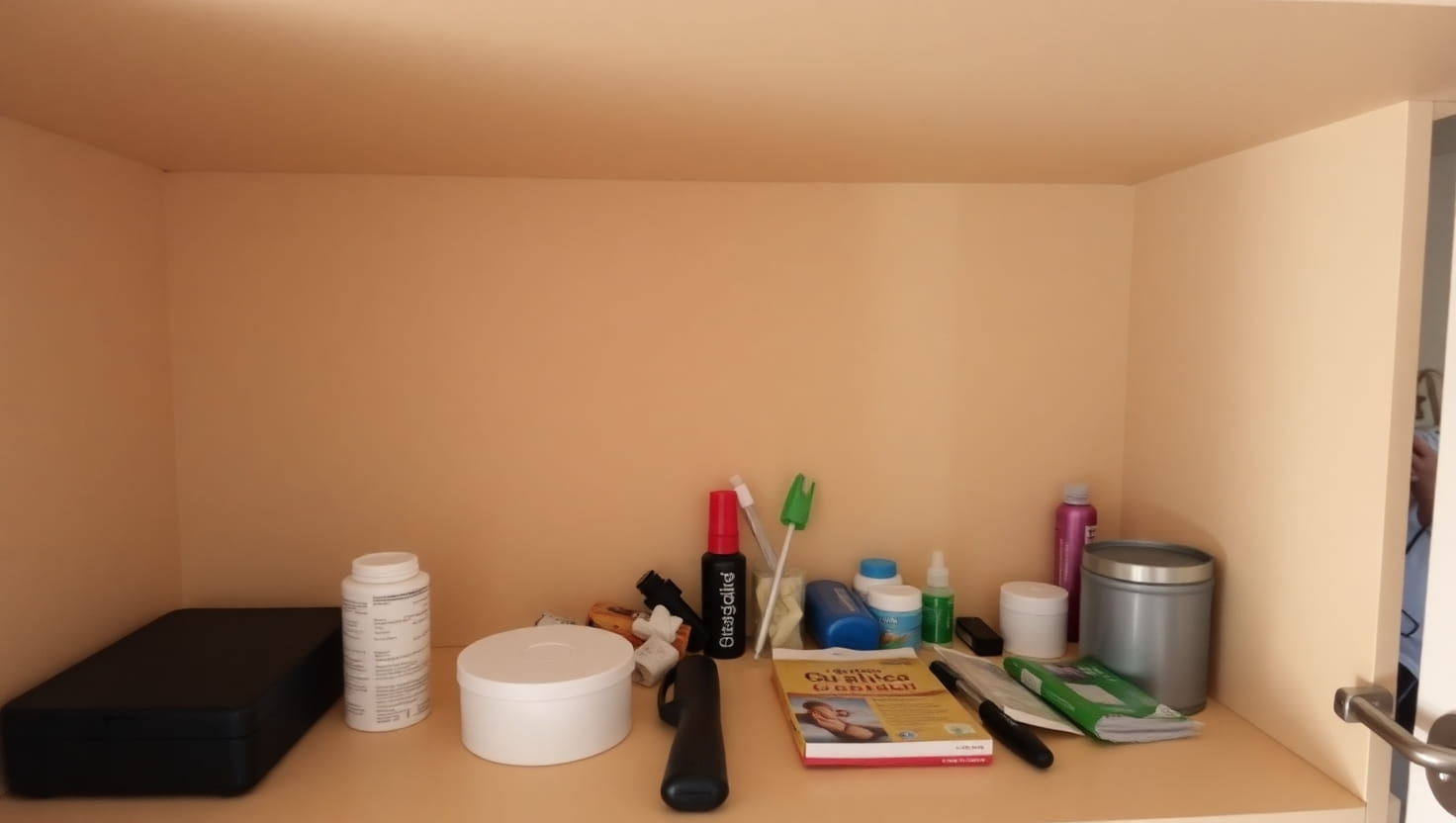
Expired or compromised products are a practical decision. Once they’ve crossed that line, they’re no longer serving you, even if they were expensive or once loved. Letting those go is less about taste and more about care.
Unused makeup is different. It might still be perfectly usable. The friction there isn’t safety, it’s relevance.
Many people keep unused makeup because it represents value that hasn’t been “earned” yet. The thinking goes: if I throw this away, I wasted money. But the money was spent at the register, not when you use the product. Keeping something you don’t reach for doesn’t recover the cost. It just extends the mental weight.
A calmer way to look at it is this: unused makeup is already telling you something. It’s telling you about your preferences, your skin, your schedule, or your patience level.
You don’t need to punish yourself for that information. You can simply accept it.
When you separate safety decisions from lifestyle decisions, decluttering becomes quieter. You’re not judging your past self. You’re just adjusting your space to fit the person who actually stands at the mirror now.
How your daily routine should set the limit
A makeup collection expands easily because there’s no built-in stopping point. Stores sell variety, not restraint. But your routine has natural limits, and those limits can guide your choices without force.
Think about the number of steps you realistically take on a weekday morning. Not the steps you could take, but the ones you usually do when time is normal and energy is average.
For many people, that number is smaller than they expect. A base product. Something for eyes. Something for lips. Maybe one extra if the mood allows.
When your collection grows beyond what your routine can absorb, items stop rotating. They sit. They expire. They quietly create clutter without ever becoming part of your day.
This doesn’t mean you should only own one of everything. It means your “easy reach” makeup should match your actual pace. Backups, special-occasion products, and experimental items can exist, but they don’t need to live in the same mental category.
Let your routine set the boundary, not trends or storage capacity. Storage can always stretch. Your mornings usually can’t.
When makeup fits the rhythm of your day, it stops feeling like another decision you have to manage.
Sentimental makeup and how to hold it lightly
Some makeup stays not because it’s useful, but because it carries a memory. A wedding lipstick. A palette you wore through a big season of change. A gift from someone who mattered.
These items don’t need to be treated like everyday clutter. They also don’t need to pretend to be part of your routine.
If something is sentimental, it’s allowed to be sentimental. What often causes discomfort is trying to justify it as practical when it no longer is.
You might decide to keep a small number of these items together, separate from your daily makeup. Not hidden away in shame, but clearly defined. This creates an honest container for memory, rather than letting it bleed into every drawer.
It also gives you permission to let go of sentimental items that don’t actually feel warm anymore. Sometimes we keep things out of habit, not affection.
A helpful check-in is to notice your body response. Does handling the item feel grounding, or does it feel heavy and complicated? That answer matters more than the story attached to it.
Sentiment doesn’t require volume. Often it does better with a little space around it.
Skin changes and the makeup that no longer follows
Skin changes quietly, and makeup collections often don’t keep up. Hormones shift. Texture changes. Sensitivities develop. Lighting in your life changes. But products stay frozen in time.
It’s common to hold onto makeup that worked beautifully a few years ago and now feels wrong, without being able to explain why. It settles differently. Emphasizes things you didn’t notice before. Feels uncomfortable by midday.
This isn’t a failure to “make it work.” It’s feedback.
If a product consistently makes you fuss, re-blend, or avoid mirrors, it’s costing you more than it gives. Even if the color is perfect. Even if it was a favorite once.
As you declutter, notice which items cooperate with your skin as it is now. These are often the ones you finish, repurchase, or reach for without thinking.
The rest may not be bad products. They’re just no longer aligned.
Letting go of them isn’t giving up on yourself. It’s acknowledging that you’re allowed to change without dragging every old version of your routine with you.
What to keep visible and what to move back
Visibility is powerful. What you see easily is what you use. What’s buried becomes background noise.
Once you’ve identified the makeup that fits your routine and your skin, consider giving it the clearest space. This doesn’t require buying organizers or redoing drawers. It can be as simple as placing the most-used items in one open tray or front section.
The goal is not display. It’s reduced effort.
Products you like but use less often can move slightly back. Still accessible, just not competing for your attention every morning.
This shift alone often reduces clutter pressure, because you’re no longer confronting everything at once. You’re meeting only what you actually need.
If something is visible and you consistently don’t reach for it, that’s information. You don’t have to act on it immediately. Just notice.
Decluttering doesn’t end with a dramatic purge. Often it continues quietly, through these small visibility choices, until the collection naturally matches the way you live.
The quiet pressure of “using it up”
There’s a common belief that the responsible thing to do is to finish every makeup product you own. On the surface, that sounds sensible. In practice, it often creates low-grade pressure that turns getting ready into a chore.
When you feel obligated to use something simply because it exists, makeup stops being supportive. It becomes a task on a mental to-do list.
This pressure usually shows up with products that technically work but don’t feel good. The lipstick that dries your lips. The foundation that looks fine but feels heavy. The eyeshadow that takes extra blending to behave.
Using these items “so they don’t go to waste” asks you to spend daily energy compensating for their shortcomings. That energy is worth something too.
It can help to reframe waste in a gentler way. The waste didn’t happen when you stopped using the product. It happened when it stopped fitting your needs. Keeping it around doesn’t reverse that.
If you enjoy finishing products, that’s fine. But finishing should come from ease, not obligation.
A supportive makeup collection works with you. It doesn’t ask you to tolerate discomfort or dullness as proof of responsibility. Let comfort and simplicity count as valid reasons to move on.
Donation, passing along, and realistic expectations
Not all makeup can be donated, and not all of it needs to be. Trying to find a “perfect next home” for every item can stall the entire process.
Some products are safe to pass along if they’re lightly used and hygienic, especially powders that can be sanitized. Friends, family members, or community groups may welcome them. But this is an option, not a requirement.
It’s also okay to acknowledge that some items have simply reached the end of their usefulness. Letting them go without ceremony doesn’t make you careless. It makes you honest.
A helpful boundary is to avoid turning decluttering into a side project that requires weeks of coordination. If passing something along feels simple and timely, do it. If it adds stress or delay, that’s information too.
The goal isn’t to perform sustainability perfectly. It’s to stop storing decisions you’ve already made.
Makeup leaves your home in many ways over time. You don’t have to manage every exit with precision. Calm, realistic follow-through supports consistency far better than idealism.
Travel makeup and the “just in case” layer
Travel-sized makeup and backup bags often become a second, forgotten collection. They’re small enough to ignore, but numerous enough to add real clutter.
Many of these items live in a permanent state of “just in case.” Just in case you travel. Just in case you forget something. Just in case you need a backup version of a product you already have.
It can help to gather all travel and backup makeup together and look at it as one group. Often you’ll see repeats of products you already keep in your daily kit.
Ask yourself which items you would actually pack if you left tomorrow. Not which ones could be useful, but which ones you realistically reach for when you’re away.
Travel makeup works best when it mirrors your real routine, not a more ambitious one. If you don’t wear full eye makeup at home, you probably won’t start in a hotel bathroom.
Streamlining this category reduces clutter in two places at once: storage and anticipation. You no longer have to remember what you have “somewhere else.”
Let travel makeup be a lighter version of your life, not a backup copy of everything.
Storage that supports decisions already made
Once you’ve clarified what stays, storage becomes much simpler. Instead of trying to control clutter, storage can quietly reinforce your choices.
The most supportive setups tend to be straightforward. Shallow containers where you can see everything. Small groupings that prevent overfilling. Clear boundaries between daily makeup and occasional makeup.
If a container is always overflowing, it’s usually holding too much, not the wrong shape. Downsizing what goes into it is often more effective than replacing it.
It’s also worth noticing whether your storage asks you to stack, dig, or open multiple layers. Those small frictions add up and can make even a reasonable collection feel annoying.
You don’t need to solve storage for your future self. You only need it to work for your current habits. As your routine shifts, storage can shift with it.
When storage reflects reality, it fades into the background. And that’s usually a sign it’s doing its job.
Letting the collection stay slightly unfinished
There’s a subtle urge to declare a decluttering project “done.” With makeup, that can lead to over-editing or chasing a feeling of finality that doesn’t really exist.
Your face will change. Your life will change. Products will come and go. A makeup collection is a living thing, even when it’s small.
Allowing it to stay slightly unfinished takes pressure off every decision. You don’t have to get it exactly right today. You’re just aligning it a little more closely with how you live now.
If something feels uncertain, it can sit in that uncertainty for a while. You don’t need to force clarity.
Over time, the makeup that belongs will prove itself through use. The rest will grow quieter and easier to release.
This approach keeps decluttering from becoming another area where you expect perfection from yourself. Instead, it becomes a gentle maintenance of comfort and ease, adjusted as needed, without urgency.
When decluttering starts to feel different
If decluttering makeup felt quieter than you expected, that’s not an accident. What tends to make progress last isn’t the category or the container. It’s the way decisions are approached, and the pressure that’s removed along the way.
Many people notice that once one area begins to feel easier, they start wondering why past efforts never held. Not with frustration, but with curiosity.
That moment matters. It’s usually where decluttering shifts from a series of projects into something more stable.
There’s a way of working that supports that shift, without intensity or constant upkeep. When you’re ready to explore that idea, it can open the door to a different relationship with your space.