Declutter Overwhelmed: A Gentle Way to Start When Everything Feels Like Too Much
A calm, pressure-free way to understand why decluttering feels overwhelming—and how to begin without pushing yourself.
If you’re declutter overwhelmed, this is not a sign that you’re bad at organizing or lacking discipline. It usually means you’ve been carrying more than your system can comfortably hold—mentally, emotionally, or both.
This isn’t a checklist. It isn’t a reset challenge. And it isn’t asking you to do anything right now.
This is a place to slow the conversation down so it’s easier to stay with.
Many people arrive at decluttering already tired. Not just from the mess, but from years of advice that assumes energy, clarity, and time are always available. When those things aren’t there, even simple suggestions can feel heavy.
You don’t need to fix that feeling before reading. You don’t need motivation or momentum.
We’re going to talk about why decluttering often feels overwhelming, even when you want less, and what tends to get in the way before any actual sorting begins. The aim here is understanding, not progress.
You can pause anywhere. Nothing here needs to be completed.
Why Decluttering Feels So Heavy Before You Even Start
For many people, the overwhelm doesn’t come from the stuff itself. It shows up earlier, at the moment you think about starting. That pause is often where everything tightens.
This happens because decluttering asks your brain to do several demanding things at once. It asks you to make decisions, confront unfinished intentions, and imagine a different version of your space. All of that requires energy, even before you touch a single object.
When life is already full, that extra demand can feel unreasonable. Your nervous system reads it as pressure, not possibility. So instead of clarity, you feel stuck.
This is usually where people assume something is wrong with them. They tell themselves they’re procrastinating or avoiding. But what’s actually happening is a kind of protective slowdown. Your system is saying, “This is more than I can process right now.”
Understanding this matters because it reframes the problem. The issue isn’t that you don’t care enough about your home. It’s that decluttering has been framed as a task that requires more capacity than you currently have.
Once that’s acknowledged, the feeling of overwhelm often softens. Not because anything has changed yet, but because the pressure to push through it has been removed.
The Hidden Cost of Trying to Declutter the “Right” Way
A common reason people feel declutter overwhelmed is the quiet belief that there is a correct way to do this. A proper order. A best method. A standard you’re supposed to meet.
Even when no one says it out loud, that expectation lingers.
When you believe there’s a right way, every choice starts to carry weight. You’re not just deciding whether to keep something. You’re evaluating whether you’re making a smart decision, a wasteful one, or an emotional one. That turns simple sorting into self-assessment.
This is exhausting.
It’s also why many people stall at the very beginning. The mental load of doing it “properly” feels heavier than the clutter itself. So the brain delays, waiting for a moment when clarity will magically appear.

That moment rarely comes.
Letting go of the idea that there is a correct approach can be surprisingly relieving. Decluttering doesn’t need to be optimized to be helpful. It doesn’t need to look impressive or efficient.
When the goal shifts from “doing it right” to simply reducing friction in your space, the task becomes less loaded. It stops being a test and starts becoming a series of small, neutral choices.
That shift alone can lower overwhelm, even before anything changes physically.
When Your Stuff Is Tied to Versions of You
Another layer of overwhelm comes from what your belongings represent. Many items aren’t just objects. They’re connected to past plans, former identities, or ways you thought life would unfold.
When you’re decluttering, you’re not only deciding what stays. You’re quietly acknowledging what no longer fits. That can feel surprisingly emotional, even if you don’t label it that way.
This is often why decluttering feels harder during life transitions. A move, a health change, a shift in work or family roles—all of these make objects feel more charged. Letting go can feel like closing a door before you’re fully ready.
There’s nothing dramatic about this. It’s subtle. You might just feel tired sooner than expected, or find yourself avoiding certain areas of your home.
That’s not resistance. It’s information.
Recognizing that some items are carrying more than physical weight allows you to approach them differently. Not everything needs to be decided at once. Some things simply need more time to lose their meaning.
When you allow that, the process becomes gentler. You’re no longer forcing yourself to be decisive before you’re ready. You’re respecting where you are.
How Overwhelm Grows When Everything Feels Equally Urgent
Overwhelm often spikes when everything in your home feels like it needs attention at the same time. Every room, every drawer, every pile competes for mental space.
When nothing is prioritized, your brain tries to hold it all. That creates a constant low-level tension, even when you’re not actively decluttering.
This is why walking into a cluttered room can feel draining before you do anything. Your mind is already sorting, scanning, and tracking unfinished decisions.
The instinctive response is often to plan a big reset. A full weekend. A complete overhaul. That can sound motivating, but it also raises the stakes. If you can’t do it all, it can feel pointless to do any of it.
A calmer approach begins by acknowledging that not everything needs your attention at once. Some areas are louder than others. Some clutter affects your daily life more directly.
You don’t have to decide what to do yet. Simply noticing which spaces demand energy, and which ones quietly wait, can reduce the sense that everything is urgent.
Clarity often begins with narrowing the field, not expanding it.
Starting With Understanding Instead of Action
When you’re declutter overwhelmed, the most supportive place to begin is not with action, but with understanding. Action asks something of you. Understanding gives something back.

This is usually where traditional advice rushes ahead. It assumes readiness. It assumes motivation. But overwhelm is often a signal that readiness hasn’t been established yet.
Taking time to understand why this feels hard creates a different foundation. It removes the idea that you need to push through discomfort to make progress.
Progress, in this context, might simply be feeling less burdened by the idea of decluttering. It might look like thinking about your space without immediately shutting down.
That’s not a small shift.
When pressure is removed, curiosity has room to show up. You may start to notice what actually bothers you, rather than what you think should bother you. That awareness tends to lead to more sustainable change later, without force.
For now, it’s enough to recognize that overwhelm isn’t an obstacle to decluttering. It’s part of the information you need to move forward in a way that fits your life.
You’re allowed to stay here for a while.
Why Motivation Is a Fragile Place to Start
When you’re declutter overwhelmed, it’s tempting to wait for motivation to arrive before beginning. Motivation feels like the missing ingredient, the thing that will make everything easier once it shows up.
The problem is that motivation is unstable. It rises and falls based on energy, stress, sleep, and what else is happening in your life. When decluttering depends on it, the process becomes unpredictable from the start.
This creates a quiet cycle. You wait until you feel ready. The space continues to press on you in the background. That pressure drains more energy, which makes motivation even harder to access. Nothing is wrong here—it’s simply how overloaded systems behave.
Decluttering becomes more sustainable when it’s no longer tied to how inspired you feel on a given day. That doesn’t mean forcing yourself to act without motivation. It means choosing starting points that don’t require it.
Understanding this can be relieving. It explains why advice that works in bursts often fails to stick. Motivation can spark action, but it rarely supports consistency.
When you stop expecting motivation to carry the process, you can look for gentler supports instead. Things like clarity, familiarity, or emotional neutrality. These are quieter than motivation, but far more reliable.
This shift doesn’t ask you to do more. It simply changes what you’re waiting for.
The Role of Decision Fatigue in Decluttering Overwhelm
One reason decluttering feels so draining is the sheer number of decisions involved. Even a small area can require dozens of micro-choices, each one asking your brain to evaluate value, usefulness, and meaning.
When you’re already tired, this decision-making load can tip you into shutdown quickly. You might find yourself standing in one spot, touching the same items without moving forward. That’s not laziness. It’s cognitive overload.
Decision fatigue doesn’t always feel dramatic. Sometimes it shows up as irritability, distraction, or the urge to do something else entirely. Your brain is looking for relief from constant evaluation.

This is why decluttering often feels easier in theory than in practice. Imagining a calmer space uses far less energy than navigating the decisions required to create it.
Recognizing decision fatigue allows you to stop blaming yourself for slowing down. It also explains why starting small doesn’t always help if those small areas are decision-dense.
Overwhelm eases when the number of active decisions drops. Not when you become better at deciding, but when fewer choices are demanded of you at once.
That awareness alone can change how you approach the process later, without requiring immediate action.
Why Big Decluttering Plans Often Backfire
When you’re feeling overwhelmed, big plans can feel comforting. A full reset promises an end point. A sense of being done. That can be appealing when clutter feels endless.
But large plans also carry hidden pressure. They assume sustained energy, uninterrupted time, and emotional bandwidth that many people simply don’t have consistently.
When life interrupts—as it always does—the plan collapses. What started as hope turns into evidence that “this never works,” reinforcing the sense of overwhelm.
This doesn’t mean big changes are impossible. It means that scale matters. Decluttering that relies on ideal conditions is fragile. It works only when everything else cooperates.
Smaller, less visible shifts tend to hold better because they don’t compete as aggressively with the rest of your life. They leave room for interruption without failing entirely.
Understanding this can help you release the belief that you need a dramatic approach to see meaningful change. Quiet adjustments often accumulate more steadily than grand efforts.
Overwhelm often decreases when the process feels survivable on ordinary days, not just good ones.
Emotional Neutrality as a Starting Point
Many people assume decluttering needs positive emotion to succeed. Enthusiasm. Excitement. A sense of purpose. While those can help, they’re not required.
In fact, emotional neutrality is often a more stable place to begin. Neutrality doesn’t ask you to feel good about the process. It simply asks that you don’t feel threatened by it.
When items feel emotionally charged, every decision feels heavier. Neutrality lowers the stakes. It allows you to interact with your space without constant self-reflection.
This doesn’t mean ignoring feelings. It means not insisting that every item be resolved emotionally in order to move forward.
Some objects can be handled practically, without meaning attached. Others may need distance before they feel manageable. Both are valid.
Decluttering becomes less overwhelming when you don’t require emotional clarity upfront. Clarity often comes later, after some pressure has been removed.
Allowing neutrality gives you permission to approach your space as it is, rather than as a symbol of who you should be.
Letting the Process Match Your Current Capacity
Overwhelm is often a mismatch between what the task demands and what you currently have to give. When those two things align more closely, the feeling shifts.
This doesn’t require lowering standards or giving up on change. It requires honesty about capacity, which fluctuates over time.

Your capacity today may be different from last year, or even last month. That doesn’t invalidate your desire for a calmer home. It simply changes the pace and shape of the process.
Matching the process to capacity means allowing decluttering to expand and contract with your life. Some seasons support more engagement. Others support maintenance, or even rest.
When you stop forcing consistency, you often gain continuity. The process stays present, even when it’s quiet.
Decluttering doesn’t need to dominate your life to make a difference. It needs to fit inside it.
Recognizing this can reduce the sense that you’re falling behind. There is no fixed timeline you’re failing to meet. There’s only the rhythm that works right now.
This understanding tends to soften overwhelm, making future steps feel more possible when the time is right.
Why Visual Clutter Affects You Even When You’re Not Cleaning
Clutter doesn’t only demand attention when you’re actively dealing with it. It has a background effect that many people underestimate. Even when you’re not cleaning or organizing, visible clutter continues to pull on your mental resources.
This happens because your brain is wired to notice unfinished patterns. Piles, stacks, and crowded surfaces signal incompletion. Your mind keeps a quiet tally of what hasn’t been resolved, even if you’re trying to rest.
For someone who is declutter overwhelmed, this can lead to constant low-level fatigue. You may feel drained without being able to point to a clear reason. The space is asking something of you, all day long.
This doesn’t mean you need to eliminate all clutter to feel better. It means that certain visual cues carry more weight than others. Some areas register as noise. Others fade into the background.
Understanding this helps explain why tidying one small, visible spot can sometimes bring more relief than organizing an entire hidden space. The nervous system responds to what it can see.
When you notice which visual areas feel loud to you, you gain information. Not instructions. Just clarity.
That clarity can eventually guide where you focus, without turning the entire home into a problem that needs solving at once.
The Difference Between Mess and Meaningful Clutter
Not all clutter creates the same kind of overwhelm. Some mess is temporary and neutral. Other clutter carries emotional or symbolic weight that makes it harder to live with.
Meaningful clutter is often tied to intention. Items waiting for future use. Projects that never quite started. Things saved for a version of life that hasn’t arrived yet.
These items don’t just take up space. They quietly remind you of plans, expectations, or unresolved choices. Over time, that reminder can turn into pressure.
This is why certain piles feel heavier than others, even if they’re small. It’s not about volume. It’s about what the items represent.
Recognizing this distinction matters because it changes how you interpret your reaction. If a space feels overwhelming, it’s not because you’re sensitive or dramatic. It’s because the clutter is asking something emotional, not practical.

Once you see that, you can stop treating all clutter the same way. Some things need sorting. Others simply need permission to exist for now, without being constantly re-evaluated.
Overwhelm eases when you stop expecting one solution to work for every kind of mess.
How Comparison Quietly Increases Overwhelm
Even when you avoid social media or organizing shows, comparison has a way of creeping in. You’ve absorbed images of what a “decluttered” home is supposed to look like, often without realizing it.
When your space doesn’t match that image, it can feel like evidence that you’re behind. Not just messy, but failing at something other people seem to manage easily.
This comparison adds an invisible layer of pressure. You’re no longer just dealing with your own comfort. You’re measuring yourself against a standard that may not fit your life, your energy, or your priorities.
For someone who is declutter overwhelmed, this makes the task feel riskier. Every decision feels like it might confirm a negative story about you.
Stepping away from comparison doesn’t require rejecting all inspiration. It means noticing when outside images increase tension instead of clarity.
Your home doesn’t need to prove anything. It needs to support you.
When comparison loosens its grip, decluttering stops being about catching up. It becomes about making your space quieter in ways that matter to you.
That shift alone can reduce a surprising amount of overwhelm.
Why Consistency Matters More Than Intensity
A common belief is that decluttering only works if you commit fully. Big efforts. Long sessions. Total focus. When that intensity isn’t sustainable, people assume they’ve failed.
In reality, intensity often creates its own problems. It asks you to override your natural limits, which can lead to burnout or avoidance later.
Consistency, on the other hand, doesn’t require dramatic effort. It simply means the process remains available to you, even in small ways.
For someone feeling declutter overwhelmed, this is an important reframe. You don’t need to do more. You need the process to feel safe enough to return to.
Consistency might look invisible from the outside. A habit of noticing. A willingness to pause. A gradual reduction in pressure around your space.
These quiet patterns tend to hold, because they don’t demand perfect conditions. They adapt as life shifts.
When decluttering becomes something you can approach without bracing yourself, it stops feeling like a project and starts feeling like maintenance.
That’s often when real change becomes possible, without force.
Allowing Decluttering to Be Incomplete on Purpose
One of the fastest ways to increase overwhelm is to treat decluttering as something that must be finished. A state you either reach or don’t.
Life rarely allows for that kind of closure.
Spaces evolve. Needs change. New items enter. Decluttering, by nature, is ongoing. Expecting it to end sets you up for frustration.
Allowing the process to be incomplete on purpose can be surprisingly freeing. It removes the sense that you’re always behind.
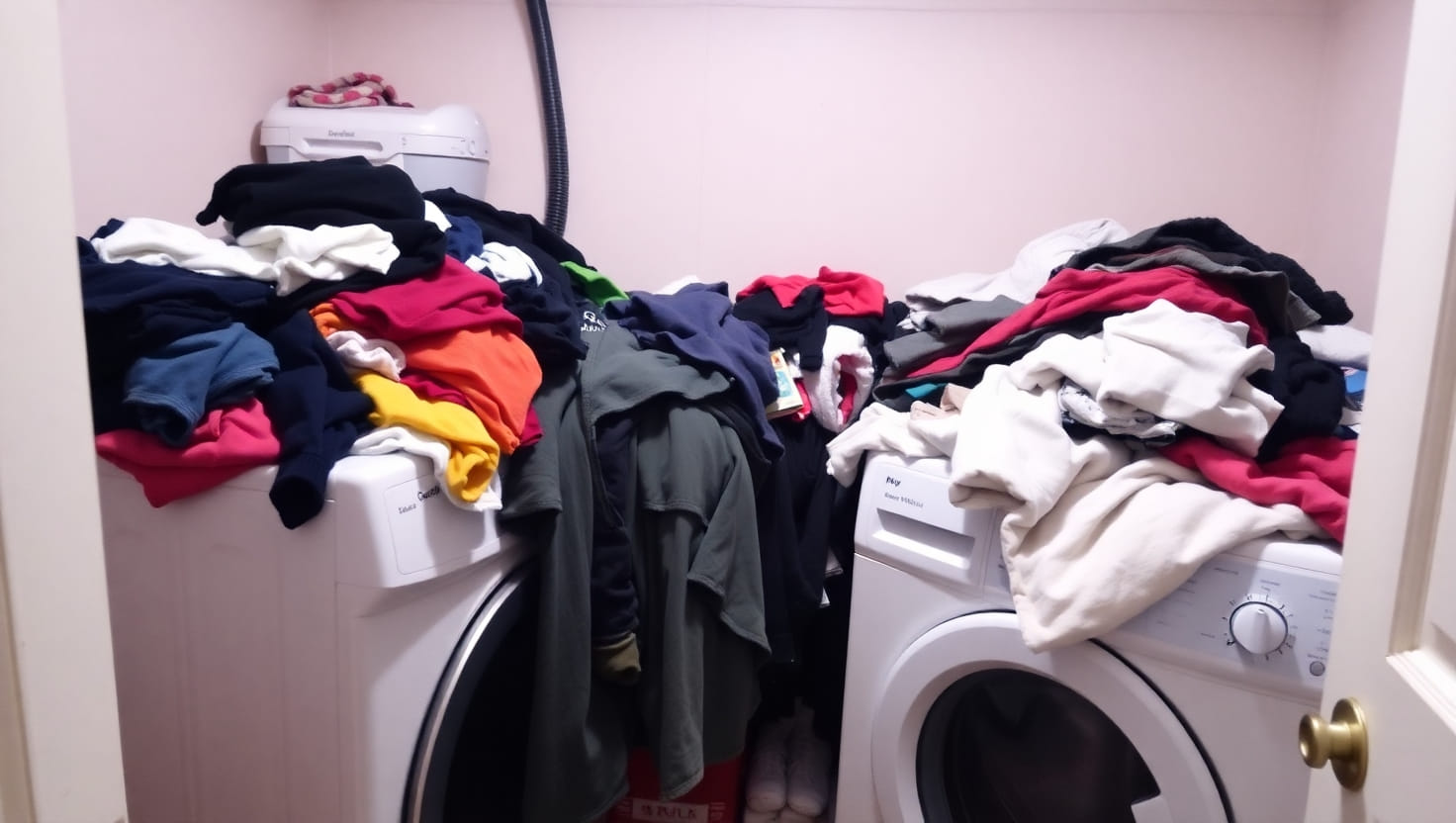
This doesn’t mean giving up. It means releasing the demand for finality.
When you accept that your home is allowed to be a work in progress, decisions feel lighter. You’re not locking yourself into permanent outcomes. You’re making choices that can be revisited.
For someone who is declutter overwhelmed, this flexibility matters. It lowers the stakes of every decision.
Nothing has to be resolved forever. It only has to feel manageable right now.
That mindset tends to soften urgency, reduce self-criticism, and create space for gentler movement later—when and if you’re ready.
When Decluttering Finally Stops Slipping Away
For many people, the hardest part isn’t starting. It’s watching progress fade, again and again, until decluttering feels unreliable or temporary. That experience can quietly teach you not to trust the process—or yourself.
What eventually makes decluttering stick is rarely more discipline or better systems. It’s usually a shift in how the process fits into real life, real energy, and real seasons. A way of approaching it that doesn’t collapse when things get busy or uneven.
If you’ve ever wondered why some attempts never last, and others slowly do, there is a gentler explanation worth exploring—one that focuses on staying power, not effort.