Declutter Pantry Without the Weekend Spiral: A Calm, Practical Reset
A gentle way to declutter your pantry, reduce food waste, and make everyday meals feel easier—without turning it into an all-day project.
When you decide to declutter pantry space, it can bring up a specific kind of overwhelm.
Not the dramatic kind. The quiet kind.
You open the door, see the half-used bags, the leaning stacks, the snacks that have migrated into every corner, and your brain starts trying to solve it all at once. Meals, budgets, waste, storage, family preferences. It’s a lot to hold in your head, especially when you were only trying to find the rice.
This is a calm approach to pantry decluttering. It isn’t a makeover. It isn’t a test of discipline. It’s a way to make the space feel more readable, so you can find what you need without that low-grade stress.
You also don’t need a perfect pantry for it to help.
A pantry can be small. It can be shared. It can be busy and still work better than it does right now.
In the next sections, we’ll move through the kind of decisions that actually make pantry clutter feel lighter, without demanding that you do everything in one pass.
If you only have a little energy, that’s enough to begin with. The goal is a steadier pantry, not a heroic one.
Start by naming what “clutter” means in a pantry
Pantry clutter has a different feel than closet clutter.
In a closet, you’re often deciding what you like and what fits your life. In a pantry, you’re dealing with unfinished intentions. Food you meant to cook. Ingredients you bought for a phase. Snacks you keep because somebody might want them.
So before you touch anything, it helps to define what clutter means here.
In a pantry, clutter is usually one of these:
- Food you can’t see clearly, so it gets replaced instead of used
- Items that don’t “live” anywhere, so they drift into the nearest open space
- Multiples that quietly compete for room and attention
This matters because pantry decluttering isn’t really about throwing things out. It’s about making the space easier to read.
When the pantry is readable, you stop buying duplicates. You stop forgetting what you already have. You stop feeling that little rush of irritation when you reach for one thing and three things fall forward.
It also gives you a fairer starting point.
Instead of “my pantry is a mess,” it becomes “my pantry isn’t organized for how we actually eat.” That’s a solvable problem, and it doesn’t require you to be a different kind of person.
The quick safety check that lowers decision fatigue
Once you’ve named what pantry clutter looks like, the next step is the one that makes everything else feel less heavy.
A quick safety check.
Not a deep clean. Not a full inventory. Just the simple pass that removes the items you don’t want to keep negotiating with while you work.
You’re looking for things that create mental noise:
- Expired items you already know you won’t use
- Packages that are open but forgotten, with no clear plan
- Anything leaking, stale, or damaged

This is not about guilt or waste. Most pantries collect these items naturally, especially in busy seasons. The point is to reduce the number of tiny decisions waiting for you.
Because every time your hand lands on something questionable, your brain has to decide again.
Keep this pass light. If you find something you’re unsure about, it can go into a short-term “decide later” spot for now. You’re allowed to keep moving.
What often happens here is a small wave of relief.
Not because the pantry is done, but because it’s quieter. The space stops arguing with you. And that makes the next step—actually seeing what you have—feel more possible.
Pulling everything out isn’t required, but visibility is
A lot of pantry advice starts with emptying every shelf.
That can work, but it can also backfire if you’re tired, short on time, or sharing the kitchen with other people who need dinner to happen. You don’t need a full unload to declutter pantry space.
What you do need is visibility.
Visibility means you can scan a shelf and understand what’s there without moving five things. It means the pantry isn’t hiding your options from you.
One gentle way to do this is to work in zones. You choose one shelf, one bin, or one category at a time, and you bring only that zone into view.
For example:
- One snack area
- One baking area
- One pasta-and-grains area
- One “breakfast” area
- One canned-goods area
As you bring a zone into view, you’re not reorganizing yet. You’re just letting your eyes take in what’s actually there.
This is usually where people notice duplicates, odd pairings, and items that don’t match how they cook anymore. Not as a failure. Just as information.
Once you can see the pantry, you can make calmer decisions. And calmer decisions are the ones that tend to hold.
The “use-first” layer that makes decluttering feel practical
After visibility comes the part that makes pantry decluttering feel worth the effort.
The “use-first” layer.
This isn’t a meal plan. It’s not a strict rotation system. It’s simply deciding which foods you want to put in your line of sight because using them soon will make the pantry feel lighter.
The use-first layer usually includes:
- Items that expire sooner
- Partially used packages
- Ingredients you bought for one recipe and then forgot
- Snacks you actually like, but keep getting buried
This is a helpful moment to be honest about your real eating patterns.
If you rarely bake, the baking shelf doesn’t need to be the easiest thing to reach. If you rely on quick lunches, those foods deserve the easiest access. A pantry works best when it reflects what happens on regular days, not ideal ones.
You can create a small “use-first” area without buying anything. A single bin, a front corner of a shelf, or one eye-level spot is plenty.
The win here is simple: you stop re-discovering the same items over and over.
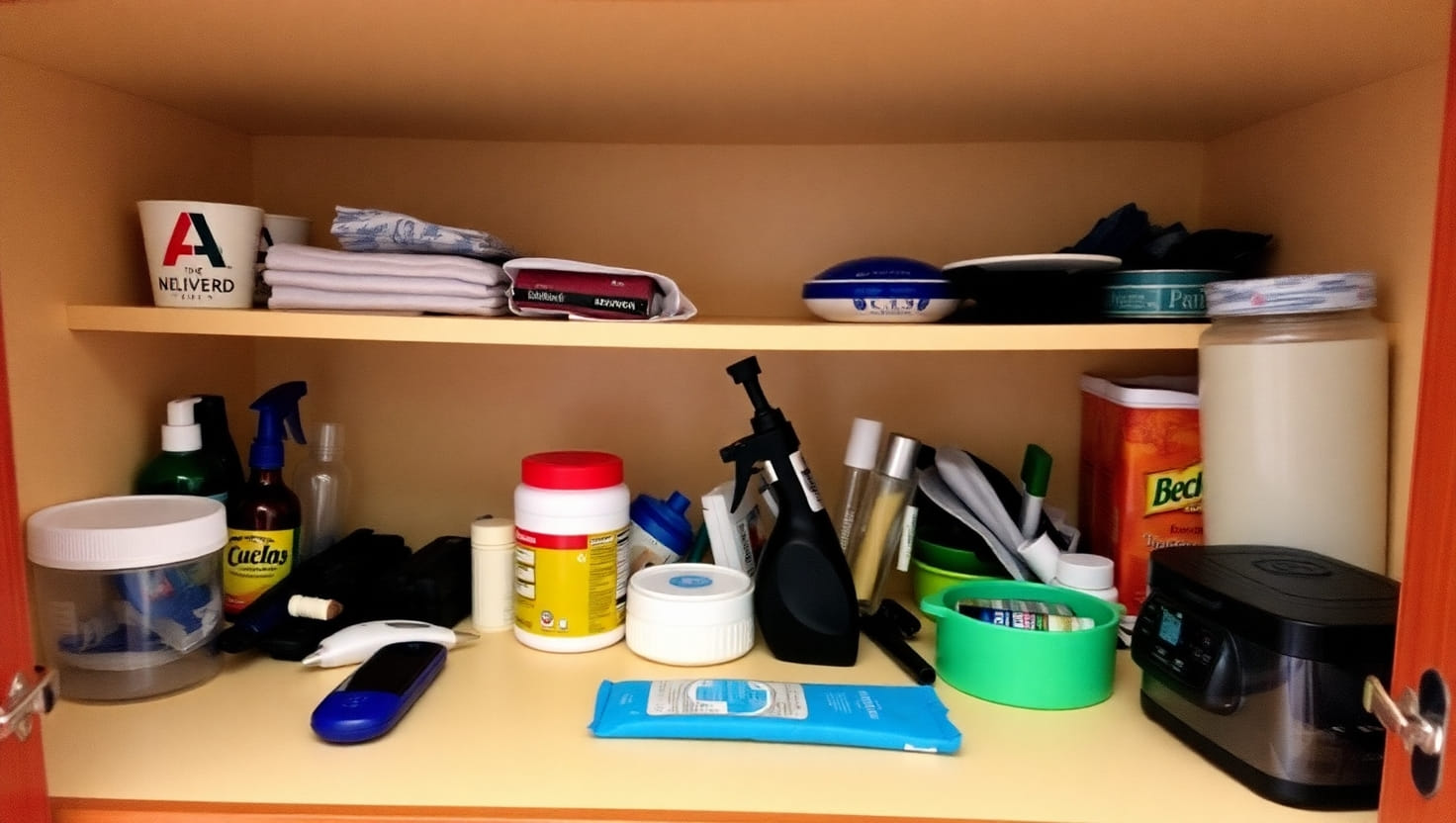
And once the pantry starts moving—food going out, space opening up—everything you do next feels less like organizing and more like relief.
Why container matching matters less than container limits
This is usually the point where people start thinking about new containers.
Clear bins, matching sets, labels. Those can be helpful, but they aren’t the thing that actually keeps a pantry calm. What matters more is the limit each container quietly sets.
A container is less about holding food and more about answering a question: how much of this do we keep?
When there’s no limit, items expand to fill whatever space exists. When there is a clear boundary, decisions get simpler. If the snack bin is full, something has to be used before more comes in. If the pasta shelf is full, that’s your signal.
You don’t need uniform containers for this to work. A mix of baskets, boxes, and existing bins is fine. What you’re watching for is whether each category has a natural stopping point.
This also helps release the pressure to store “just in case” quantities. The container becomes the neutral decision-maker, not you.
If something doesn’t fit, it doesn’t mean you’re doing pantry decluttering wrong. It means the category has outgrown the space it’s been given, or the space no longer matches how you eat.
That information is useful. It lets the pantry adjust slowly, instead of requiring a full reset every few months.
Letting go of food that belongs to an older version of you
Pantries often hold food for people we used to be.
The version of you who tried a new diet. The version who cooked differently. The version who thought weekday dinners would be more elaborate than they turned out to be.
This can make decluttering pantry shelves feel heavier than expected, because the food represents effort, hope, or money already spent.
A gentle way through this is to ask one steady question: would I realistically use this in the next few months, the way my life looks now?
Not in theory. Not in a better season. Just now.
If the answer is no, that food is asking for more energy than it deserves. Keeping it means continuing to re-decide every time you see it.
Letting it go doesn’t erase the intention you had when you bought it. It just acknowledges that intentions change.
Some items can be donated. Some can be composted. Some might simply need to be released. None of that is a moral issue.
A pantry that matches your current life is easier to maintain. It asks less of you. And that’s usually what people are actually craving when they say they want less clutter.
Creating zones that support real cooking, not ideal cooking
Once some space opens up, zoning starts to make sense.
Zones are not about making the pantry look impressive. They’re about reducing the number of steps between deciding to cook and actually cooking.
The most helpful zones tend to be activity-based, not category-perfect.
For example:
- Everyday meals
- Quick snacks
- Baking or occasional projects
- Breakfast and morning foods
- Backstock or overflow
When zones match how you move through the kitchen, you stop scanning the entire pantry for one item. Your body learns where things are.
This is also where it helps to notice friction. If you always pull ingredients from three different shelves to make the same meal, that’s a sign the zone could be tighter.
Zoning doesn’t need to be final. It’s allowed to be provisional. As you cook and shop, you’ll notice what wants to shift.
The goal isn’t to lock the pantry into a system. It’s to give it a shape that supports you on regular days, when energy is limited and dinner still needs to happen.
A pantry that works with your habits quietly stays decluttered longer.
How to handle duplicates without forcing yourself to choose
Duplicates are one of the most common sources of pantry stress.
Two open bags of rice. Three kinds of the same sauce. Multiple boxes of something no one seems to finish.
The instinct is often to force a decision right away. Keep one. Toss the rest. But that pressure can stall the whole process.
A calmer approach is to temporarily group duplicates together.
When they’re side by side, a few things usually become clear:
- Which one you reach for first
- Which one has been sitting longest
- Which one doesn’t really fit your taste anymore
You don’t have to decide everything immediately. Sometimes the best move is to place the less-used duplicate behind the one you prefer and see what happens naturally.
This removes the sense that you’re “wasting” something by choosing wrong. The pantry itself becomes the experiment.
If, after time, one item continues to be ignored, the decision tends to feel easier. Not urgent. Just obvious.
Declutter pantry work goes better when you let patterns reveal themselves instead of demanding certainty upfront.
Leaving breathing room so the pantry can absorb real life
One of the quiet markers of a functional pantry is empty space.
Not a lot. Just enough.
When every shelf is packed edge to edge, there’s no margin for grocery days, bulk buys, or unexpected items. The pantry immediately tips back into clutter because it has nowhere to absorb change.
Leaving breathing room is a form of maintenance.
It means the pantry can flex without needing constant correction. It means new items don’t immediately feel like a problem.
This can feel uncomfortable at first, especially if you’re used to maximizing space. Empty shelves can look unfinished. But they serve a purpose.
They make the pantry easier to read. Easier to put things away. Easier to live with.
You don’t have to engineer this. Often it happens naturally as you remove expired items, group duplicates, and create zones.
If you notice a shelf that feels tight, it’s usually a sign to reduce that category slightly, not to add more structure.

A pantry with room to breathe tends to stay calmer, even when life gets busy.
Adjusting shelf height before buying new solutions
Before adding anything new to the pantry, it helps to look at what the shelves themselves are doing.
Shelf height quietly determines what gets used and what gets forgotten. Tall shelves invite stacking. Short shelves invite cramming. Neither is wrong, but both influence clutter.
If your pantry allows adjustable shelves, a small change here can make a big difference. Lower shelves often work better for everyday items because you can see everything at once. Taller spacing can be reserved for bulky or backstock items that don’t need frequent access.
This isn’t about optimizing every inch. It’s about reducing visual friction.
When you can see the front and back of a shelf without moving things, your brain relaxes. You stop overbuying. You stop losing items in the shadows.
If shelves aren’t adjustable, you can still work with height by being intentional about what goes where. Lightweight, often-used items do better higher up. Heavy or awkward items are easier to manage lower down.
Declutter pantry efforts tend to stick better when the structure supports them. Sometimes the issue isn’t how much you own, but how the space itself is set up to hold it.
A few minutes noticing shelf height can save hours of future frustration.
Making peace with “almost empty” packages
One of the most persistent pantry annoyances is the almost-empty package.
The box with one serving left. The jar with just enough for part of a recipe. The bag you keep because throwing it out feels premature.
These items take up disproportionate mental space. Every time you see them, you’re reminded to use them, decide about them, or move them.
A gentle way to handle this is to gather them intentionally.
An “almost empty” zone can be a small basket or a front corner of a shelf. The purpose isn’t to shame these items into being used. It’s to stop them from scattering across the pantry.
When they’re together, they stop interrupting your attention. They also become easier to use up naturally, because you can see them all at once.
This works especially well for grains, snacks, and baking ingredients.
If something sits in that zone for a long time without being used, that’s information. It may not belong in your current pantry anymore.
Decluttering isn’t always about removal. Sometimes it’s about containment. And containment can be enough to restore a sense of order.
Why labels are optional, not foundational
Labels often get framed as the finishing touch of a decluttered pantry.
They can be helpful, especially in shared households. But they are not what makes a pantry work, and they’re not required for clarity.
A pantry functions when categories are obvious without explanation.
If you need a label to remember what goes somewhere, the zone may not be doing its job yet. If you need a label to keep people from moving things constantly, the system may be fighting natural habits.

Before labeling, it helps to live with the layout for a while. Let patterns settle. Notice what gets put back easily and what doesn’t.
If you do add labels, keep them simple. One or two words. Neutral language. No instructions.
Labels should support memory, not enforce behavior.
Many people find that once zones are intuitive and limits are clear, labels become unnecessary. Others use them selectively, and that’s fine too.
The key is not mistaking polish for function. A calm pantry is one you can maintain on tired days, not one that looks finished.
Resetting expectations around bulk buying and backstock
Bulk buying can quietly undo pantry decluttering if expectations aren’t adjusted.
It’s not that buying in bulk is wrong. It’s that bulk items need a clear plan for where they live and how they get used.
Backstock works best when it’s intentionally separate from everyday items. When bulk purchases spill into daily zones, they crowd out the things you actually reach for.
A single shelf, bin, or section dedicated to backstock is usually enough. The rule is simple: everyday shelves stay readable. Overflow goes elsewhere.
This also helps you see what you already have. When backstock is visible but contained, you’re less likely to buy duplicates.
If space is limited, it may be worth revisiting how much bulk buying actually helps. Saving money doesn’t always feel like a win if it adds stress every time you open the pantry.
A pantry doesn’t need to hold everything at once to be useful. It just needs to support the rhythm of how food comes in and goes out.
Letting the pantry stay slightly unfinished
One of the reasons pantry decluttering often doesn’t last is the pressure to “finish.”
Finish implies finality. Pantries don’t work that way.
Food moves. Preferences change. Schedules shift. A pantry that’s too finished has no room to adapt.
Letting the pantry stay slightly unfinished keeps it flexible. It allows you to notice what’s working and what isn’t without feeling like you’ve failed a system.
This might look like a shelf you haven’t decided how to use yet. Or a category that feels temporary. Or a container that’s doing an okay job, not a perfect one.
That’s not a problem. That’s space for adjustment.
When you declutter pantry space with this mindset, maintenance becomes lighter. You make small corrections instead of big overhauls.
The pantry stays readable, even when it isn’t perfect.
And that quiet steadiness is usually what makes the difference between a pantry that looks good once and one that supports you over time.
When decluttering starts to feel like something you don’t have to restart
At some point, pantry work stops being about shelves and food.
It starts to touch a deeper question: why some changes seem to fade, while others quietly hold.
This is often where people notice that the problem was never motivation or willpower. It was timing, pressure, and systems that asked too much all at once.

When decluttering begins to stick, it usually does so without drama. It settles into daily life. It asks less of you over time instead of more.
If you’ve ever wondered why certain resets finally last, that curiosity is worth listening to. Not as a task. Just as an opening.