Declutter Paper Without Overwhelm: A Calm Way to Finally Deal With the Piles
A steady, non-rushed approach to declutter paper when the stacks feel heavy and emotionally loaded.
Paper clutter has a particular way of settling into a home. It doesn’t arrive all at once, and it rarely feels dramatic enough to address in the moment. It accumulates quietly. A letter here. A form there. Something you’re not ready to decide about yet. Over time, those small pauses turn into stacks that feel heavier than their size suggests.
If you’re here because you want to declutter paper, it helps to know that this isn’t a motivation problem. Paper asks for attention, decisions, and future thinking, all at once. That combination can make even a small pile feel mentally loud. Many people delay dealing with it not because they don’t care, but because they’re already carrying enough.
This is not a push to finally “get it done.” It’s an invitation to look at paper clutter differently. Paper represents obligations, information, memories, and sometimes unresolved moments. Treating it like neutral stuff you can simply toss or file often creates resistance instead of relief.
As we move through this, the focus stays on easing the pressure around paper first. Once the pressure softens, the piles tend to feel more manageable on their own. Nothing here requires speed, perfection, or a fresh start. You’re allowed to meet the paper exactly where it is.
Why Paper Clutter Feels Harder Than Other Categories
When you declutter paper, you’re rarely just sorting objects. You’re sorting meaning. A single sheet can represent a task you haven’t finished, a decision you postponed, or information you’re afraid to lose. That’s why paper clutter often creates more stress than bulkier items like clothes or dishes.
Paper also doesn’t offer clear visual cues. A stack of mail looks similar whether it’s important or irrelevant. That ambiguity forces your brain to stay alert. Every time you see the pile, your attention is tugged toward unanswered questions. This low-level vigilance is tiring, even if you’re not consciously thinking about it.
Another layer is timing. Many papers are tied to “later.” Later you’ll read it. Later you’ll file it. Later you’ll decide what to do. Over time, later becomes a vague future that never quite arrives. The pile grows, and with it, the sense that you’re behind.
Understanding this matters because it changes how you approach the problem. Paper clutter isn’t a failure of organization. It’s a signal that too many decisions were deferred without support. When you see it this way, the goal shifts. Instead of trying to force clarity all at once, you can focus on reducing the emotional weight paper carries.
That reduction is often what makes progress possible.
Letting Go of the Idea That You Need a Perfect System
Many attempts to declutter paper stall because they start with systems. Folders, binders, labels, color coding. On the surface, these tools promise control. In practice, they often ask for more decisions than you have energy for right now.
A perfect system assumes you know exactly what you’ll need later and how often you’ll need it. Most people don’t. Paper changes meaning over time. What felt critical six months ago might be irrelevant now. When systems don’t account for that shift, they become another source of pressure.
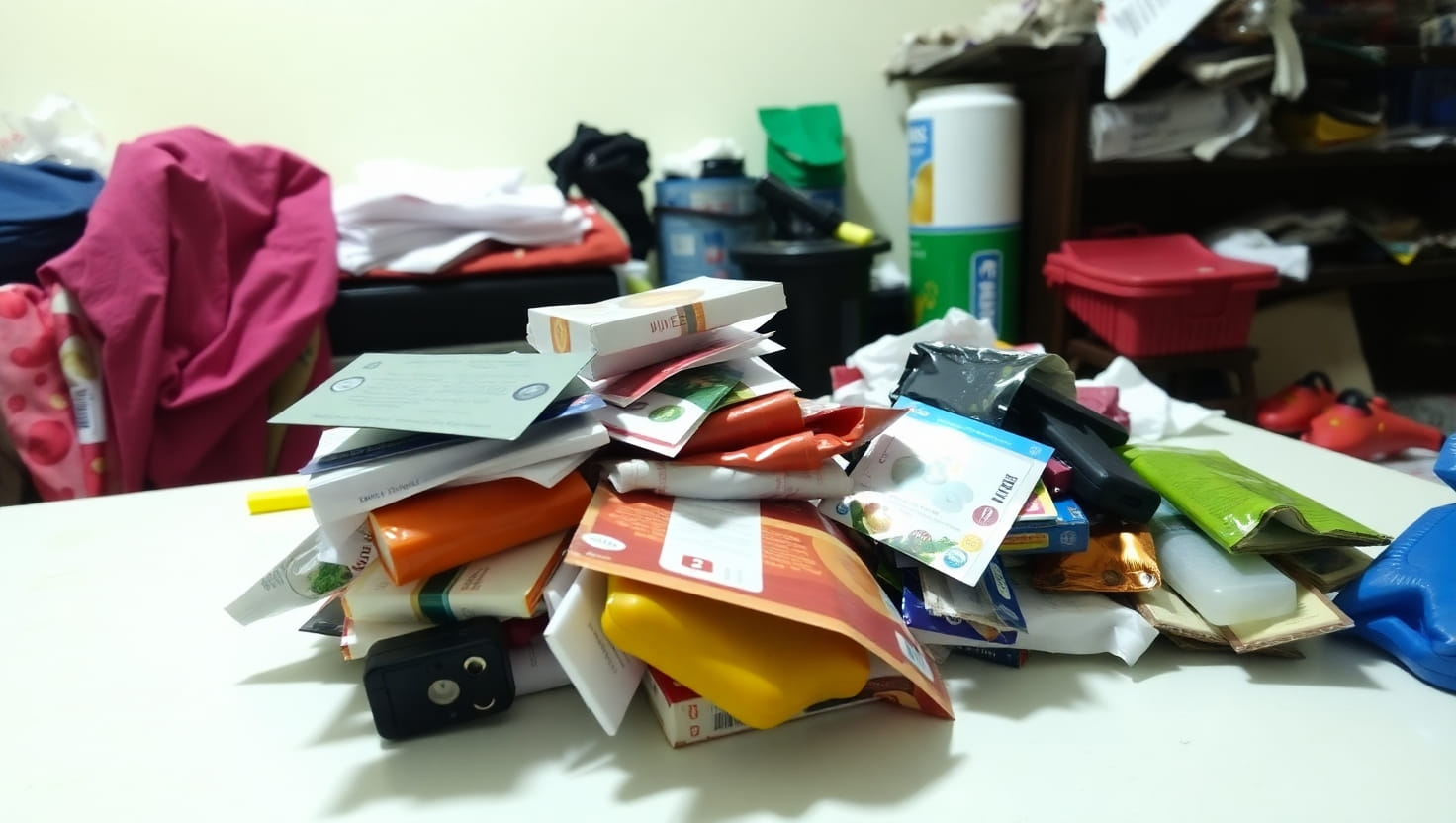
If you’ve tried organizing paper before and couldn’t maintain it, that’s useful information. It suggests the system asked too much, too soon. Decluttering paper works better when the structure grows out of your actual habits, not an ideal version of them.
This doesn’t mean abandoning organization entirely. It means postponing precision. Early on, broad categories are often more supportive than detailed ones. They allow you to move paper out of your immediate space without demanding final answers.
Relief usually comes before refinement. Once the volume is lower and the noise has settled, clearer decisions tend to follow. You’re not avoiding order by slowing down. You’re creating the conditions where order can exist without constant effort.
Separating Paper That Needs Attention From Paper That Doesn’t
One gentle way to approach paper clutter is to stop treating it as a single problem. Not all paper asks the same thing of you. Some pieces genuinely require action or reference. Others are simply present because no one gave you permission to let them go.
When everything is mixed together, your brain has to stay on high alert. Separating paper by its level of demand can lower that intensity. This isn’t about deciding what to keep forever. It’s about noticing what needs your energy now versus what doesn’t.
There is often a small subset of paper that truly matters in the present. Identifying that subset can shrink the problem quickly, even if the physical piles remain for a while. The rest becomes less urgent once it’s no longer competing for attention.
This approach also respects limited capacity. You don’t have to process every document to make progress. You can acknowledge that some paper can wait without pretending it’s resolved.
As you practice this kind of separation, paper stops feeling like one large accusation. It becomes a collection of smaller, more neutral pieces. That shift alone can make the idea of decluttering paper feel less charged and more approachable.
Creating Space Without Forcing Final Decisions
There’s a quiet difference between clearing space and finishing a task. When it comes to paper, aiming for completion can create unnecessary strain. Creating space, on the other hand, is often enough to restore calm.
Space can be physical, like clearing a surface. It can also be mental, like knowing where paper belongs while it waits. Neither requires you to decide everything right now. They simply reduce friction in your daily environment.
Many people find that once space exists, decisions become easier later. You see patterns. You notice what you actually reference. You gain confidence in what you can release. None of that needs to happen on day one.
If decluttering paper has felt like an all-or-nothing project in the past, it may help to redefine success. Success can be quieter. A drawer that closes. A stack that’s contained. A surface that feels usable again.

These changes don’t announce themselves loudly, but they matter. They lower the background stress that paper clutter creates. From there, you’re free to pause, continue, or stop entirely. The process adapts to you, not the other way around.
How Paper Quietly Collects Emotional Weight
Paper clutter often carries more than information. It holds unfinished moments. A bill you meant to question. Notes from a phase of life that feels distant now. Documents tied to responsibilities you didn’t choose but still carry. Over time, these papers begin to feel heavier, even if you rarely touch them.
This weight builds quietly. You may not notice it day to day, but you feel it when you try to move a pile and hesitate. That hesitation isn’t about the paper itself. It’s about what it represents and the energy required to engage with it.
When you’re trying to declutter paper, acknowledging this emotional layer can make the process gentler. Instead of asking, “Why can’t I just deal with this?” you can recognize that paper often asks for emotional labor as well as practical effort. That recognition removes some of the self-criticism that tends to creep in.
Not all paper carries the same charge. Some feels neutral. Some feels tense. Some feels surprisingly tender. Simply noticing which is which can soften your response to the clutter. You’re no longer pushing against an undefined mass. You’re observing individual pieces with different weights.
This awareness doesn’t force action. It creates understanding. And understanding is often the first thing that allows movement to happen without resistance.
Why Waiting for “Enough Time” Keeps Paper Stuck
Paper clutter is often postponed until a mythical stretch of free time appears. A quiet afternoon. A clear weekend. A moment when you’ll finally be able to focus properly. For many people, that moment rarely arrives.
The problem isn’t poor planning. It’s that decluttering paper is mentally demanding, and your brain knows it. Waiting for “enough time” is a protective instinct, not procrastination. It’s your system saying it doesn’t want to open something it can’t close.
Unfortunately, this waiting can freeze the process entirely. Paper continues to arrive while the ideal conditions never quite materialize. The piles grow, reinforcing the idea that the task requires even more time than before.
A different approach is to release the expectation of completeness. Paper doesn’t need marathon sessions to shift. It often responds better to shorter, contained attention. When the goal stops being “finish everything,” even small interactions can feel safe.
This reframing doesn’t demand that you do more. It removes the pressure that has kept you from starting. Once that pressure eases, paper becomes something you can touch briefly without it taking over your day.
The Difference Between Managing Paper and Resolving It
When people talk about decluttering paper, they often mean resolution. Decisions made. Files finalized. Nothing left hanging. While that can be satisfying, it’s not always realistic or necessary.
Managing paper is different from resolving it. Management is about containment and clarity in the present moment. Resolution is about closure. Many papers don’t need closure right now. They need a place to rest without intruding on your space or attention.
Confusing these two goals can make paper feel impossible. If every document requires a final answer, the task quickly becomes overwhelming. Allowing some paper to remain unresolved but managed can dramatically lower the barrier to progress.
This doesn’t mean avoiding decisions forever. It means recognizing that timing matters. Some clarity only comes with distance. Giving paper a holding space honors that reality instead of fighting it.
When management comes first, resolution often follows naturally. Papers expire. Needs change. What once felt important becomes obviously unnecessary. By then, letting go feels lighter because you didn’t force it.
How Visual Containment Reduces Mental Noise
Paper clutter affects you even when you’re not actively thinking about it. Visible stacks signal unfinished business, and your mind keeps checking them, just in case. This constant background awareness is draining.
Visual containment can interrupt that loop. When paper is gathered into defined, limited spaces, your brain receives a different message. The paper is still there, but it’s no longer demanding immediate attention.
This is why simply moving paper into a drawer, box, or tray can bring relief. You haven’t decided anything yet, but you’ve changed the visual signal. The clutter stops broadcasting urgency every time you pass by.
Containment isn’t avoidance. It’s a form of boundary-setting. You’re telling the paper when it’s allowed to ask for your attention. That alone can reduce the sense of being perpetually behind.
For many people, this step is enough to restore a sense of control. Once the noise quiets, you can choose if and when you want to engage more deeply. The paper waits. It doesn’t chase you.
Releasing Paper Without Needing Absolute Certainty
One of the hardest parts of decluttering paper is the fear of needing something later. Paper feels risky to let go of because it’s tied to information, proof, or memory. The idea of making a wrong decision can stall everything.
Absolute certainty is an unrealistic standard. Most of the time, decisions are made with partial information and lived experience. Trusting that can be uncomfortable, especially with paper that seems important “just in case.”
Instead of certainty, you can look for sufficiency. Is this paper likely to matter again? Would there be another way to get this information if needed? Does keeping it genuinely add safety, or just maintain a habit of caution?
These questions aren’t meant to trap you into answers. They’re meant to loosen the grip of fear. Many people discover that the risk of keeping too much paper is greater than the risk of letting some go.
As confidence grows, decisions tend to feel quieter. You don’t need to prove that every choice is perfect. You only need it to feel reasonable in the moment you make it.
When Paper Represents Versions of Yourself You’ve Outgrown
Some paper lingers because it belongs to an earlier version of you. Notes from a job you left. Printouts from a plan that changed. Articles you saved when your life looked different. Decluttering paper can quietly bring those moments back into view.

This is often where people slow down. Not because the paper is useful, but because it carries identity. Letting it go can feel like erasing proof that a chapter mattered. Even when you know you’re done with that phase, the paper feels like a witness.
It helps to remember that your experiences don’t live in the documents. They live in you. Paper may have supported you once, but it doesn’t need to follow you forever to validate that time.
You don’t have to force yourself to release these papers immediately. Sometimes simply noticing why they’re hard to discard is enough. That awareness turns the decision from a practical one into a respectful one.
As you grow more comfortable with the idea that change doesn’t require documentation, these papers often loosen their hold. You’re not losing history. You’re choosing what deserves to stay physically present in your life now.
The Quiet Relief of Reducing, Not Eliminating
There’s a common belief that decluttering paper only counts if the piles disappear entirely. In reality, reduction often brings most of the relief. Even a small decrease can shift how a space feels and how you feel within it.
Reducing paper lowers visual noise. It shortens the time your eyes linger on stacks. It lessens the sense that everything needs your attention at once. These changes are subtle but noticeable.
Elimination asks for certainty and confidence. Reduction asks for willingness. You can be unsure and still reduce. You can keep some things and still experience calm.
This mindset can make decluttering paper feel safer. You’re not committing to an extreme. You’re simply lightening the load a bit. That lightness tends to invite more clarity over time.
Many people find that once reduction becomes acceptable, progress accelerates naturally. Without pressure to finish, decisions feel less charged. Paper moves out more easily because you’re no longer arguing with yourself about what “should” happen.
How Repetition Builds Trust With Paper Decisions
Paper decisions often feel heavy because they’re infrequent. When you only declutter paper once a year, every choice feels high-stakes. The lack of repetition keeps your confidence from developing.
Gentle repetition changes that dynamic. Seeing similar papers again and again builds familiarity. You start to notice patterns. You learn which documents never matter later and which ones truly do.
This isn’t about routines or schedules. It’s about exposure. The more often you interact with paper without forcing big outcomes, the more your nervous system relaxes around it.
Trust grows quietly. You begin to believe yourself when you say you won’t need something. You remember past decisions that turned out fine. That memory reduces fear.
Over time, decluttering paper stops feeling like a test. It becomes a normal interaction with your environment, one that doesn’t require special energy or resolve.

Letting Paper Be Temporary by Default
One helpful shift is to treat most paper as temporary unless proven otherwise. This reverses the usual assumption that paper must be kept unless you’re certain it can go.
Temporary doesn’t mean disposable without thought. It means acknowledging that most paper has a short useful life. Instructions expire. Notices lose relevance. Information becomes outdated.
When paper is seen as temporary, keeping it becomes an active choice rather than a passive one. This reduces accumulation without requiring constant effort.
This perspective can be especially freeing if you’ve been holding paper “just in case.” The burden of proof changes. Paper no longer has to earn its place forever. It simply stays as long as it’s serving you.
As this mindset settles in, paper begins to cycle through your space instead of stagnating. That movement keeps clutter from rooting itself as deeply.
Allowing the Process to Stay Incomplete
One of the most stabilizing ideas when you declutter paper is that the process doesn’t have to end. There doesn’t need to be a final moment where all paper is handled and nothing remains.
Incomplete doesn’t mean unsuccessful. It means open-ended. Paper will continue to enter your life, and your relationship with it will continue to evolve.
Allowing incompletion removes urgency. You’re not racing toward an ideal state. You’re responding to what’s present, as capacity allows.
This approach keeps paper from becoming a recurring crisis. Instead of building toward a dramatic overhaul, you maintain a gentle, ongoing awareness.
When you give yourself permission to stop without finishing, paper loses much of its power. You’re no longer negotiating with an imaginary finish line. You’re simply engaging, then resting, then engaging again when it makes sense.
When Decluttering Starts to Feel Like Something That Could Last
If you’ve noticed a soft shift as you read—less urgency, less resistance—that matters. For many people, the hardest part of decluttering isn’t starting. It’s trusting that the calm won’t disappear once attention drifts elsewhere. Paper is often where that doubt shows up first.
What tends to make the difference isn’t a better system, but a different relationship with the process itself. One that adjusts to energy, timing, and real life instead of fighting them.
There is a way decluttering can stop feeling temporary. Not forced. Just settled. When you’re ready, that possibility can unfold gently from here.