Declutter Wires Without Losing Your Mind: A Calm, Practical Way to Tame the Tangles for Good
A gentle, room-by-room approach to sorting cords and cables without pressure, panic, or overbuying organizers.
Wires have a specific kind of clutter energy. They don’t look “messy” in the normal way, but they keep your brain on alert. A cord draped across a floor, a power strip with too many plugs, a mystery cable you keep stepping over. It’s small, but it adds up.
This article is for that exact kind of clutter. Not the dramatic, whole-house reset. Just the quiet irritation of wires that never seem to have a home.
You don’t need to know what every cable does right away. You also don’t need to buy containers or label makers to begin. For now, it’s enough to create a little clarity and reduce the constant visual noise.
A helpful place to start is with the wires you see every day. The ones near the couch, the bedside table, the kitchen counter, the desk. These are the cords that quietly ask for attention again and again.
If you can make even one of those areas feel calmer, the rest gets easier to face. Not because you’ve “fixed it,” but because your space stops arguing with you in that one spot.
Make a simple “cord boundary” before you sort anything
Before you decide what to keep, it helps to decide where cords are allowed to live. Wires feel chaotic partly because they sprawl. They creep across surfaces and spill out of drawers. So instead of starting with decisions, start with containment.
Pick one small zone. A single outlet area is enough. Then create a temporary boundary for what belongs there. This can be as simple as a shallow box lid, a small bin, or even a folded towel on the floor. The point is not beauty. The point is: cords in one place, not everywhere.
Now gather only the wires that clearly belong to that zone. Phone charger from the couch. Lamp cord. The power strip that lives behind the side table. Bring them into the boundary and let them sit there together.
This is usually where the tension drops a little. When cords are contained, your brain can stop scanning. You’re not solving everything yet. You’re just making the scene smaller.
Once the boundary exists, sorting becomes less emotional. It turns into a practical question: what actually needs to be plugged in here, and what is just hanging around because it never had a better place?
Separate “in-use” from “not-in-use” with one gentle pass
With your boundary in place, the next move can stay very light: divide cords into two simple groups.
In-use means it is plugged in right now, or you unplug it and immediately know it’s needed in this spot. Not-in-use means it’s here, but it isn’t doing anything today.
That’s it. No deep decisions yet. No “what if I need this someday” spiral. Just a first pass that respects your current life.
As you do this, you may notice something interesting: some cords feel emotionally loud because they carry uncertainty. A cable you can’t identify. A charger you don’t fully trust. An old adapter you keep “just in case.” When that happens, you can give it a neutral status instead of forcing clarity.

A small “not sure” mini-pile is allowed. It’s still progress, because it’s no longer tangled into your everyday setup.
Once you can see what’s truly in-use, you can make that setup kinder. Less strain on outlets. Less cord drag across the floor. Less wrestling every time you vacuum or move a table.
Reduce the daily snags before you touch the mystery cords
Now that the in-use cords are visible, focus on the friction points. Wires become a recurring problem when they snag on your routines.
Look for the moments that regularly annoy you:
- cords that droop and get stepped on
- chargers that slide off the table
- plugs that loosen because the cable is pulled at an angle
- power strips that wander and twist
You’re not aiming for perfection here. You’re aiming for “less fussy.”
Often, one small change helps a lot. Move the power strip onto a stable surface instead of the floor. Route a cord behind the table leg so it stops crossing your walking path. Shorten slack by looping it once and securing it with a simple tie.
If you don’t have cord ties, you can still do this step. A soft loop and a temporary wrap (even a twist of paper or a spare hair tie) can hold things in place until you decide what you like.
This is usually the point where the area starts to feel calmer without looking dramatically different. And that matters, because it helps you trust the process. You’re not creating a showroom. You’re making your space easier to live in, one small friction point at a time.
Create a “known cords” home so they stop migrating
Once the active cords feel steadier, the not-in-use ones become easier to handle. The goal is not to store them perfectly. The goal is to stop them from drifting back into your daily spaces.
Choose one home for “known cords.” Known means you can name what it connects to, even if you don’t use it every week. Laptop charger. Printer cable. Extra phone cable. A spare HDMI.
A simple container works well here: a small bin, a shoebox, a pouch, a drawer section. The best choice is the one you will actually keep using without thinking about it.
As you place cords into this home, try a small kindness: loosely coil them in a way that won’t fight you later. Not tight, not precious. Just enough to prevent instant tangling.
If a cord feels like it belongs to a specific item, you can store it near that item instead of in the cord bin. That’s often the most natural solution, especially for rarely-used devices.
What you’re building is a quiet system your future self can understand. Not a museum of cables. Just a simple agreement: everyday cords stay in their zone, and the rest lives in one dependable place.

Decide what “just in case” actually means in your house
This is usually where progress slows. The cords that aren’t in use, but also don’t feel disposable. They hover in that uncomfortable middle space labeled “just in case.”
Instead of forcing a yes-or-no decision, it helps to define what “just in case” realistically means for you. Not in theory. In your actual home.
For many people, “just in case” really means one of three things:
- I use this less than once a year
- I might replace the device someday
- I don’t remember what this goes to, but I’m afraid to need it
None of these are wrong. They just need different handling.
If a cord supports a device you still own, it earns a spot in your known cords home. If it supports something you no longer have, it’s allowed to pause in a separate holding space while you decide.
What matters most is that these cords stop living in your active areas. They don’t need to disappear. They just need to stop asking for attention every day.
By giving “just in case” a clear, contained role, you reduce the mental drag without demanding certainty. That alone can make wire clutter feel far less heavy.
Handle unidentified cords without turning it into a project
Unidentified cords have a way of stalling everything. You pick one up, feel unsure, and suddenly the whole process feels risky.
You don’t need to solve that puzzle right now.
Instead, create a very small category for unknown cords. One envelope, one zip bag, one section of a drawer. Keep it intentionally limited so it doesn’t grow into a graveyard.
When you place a cord there, you’re not giving up. You’re postponing with structure.
If it helps, you can add a simple note later, like “found near TV” or “office drawer.” But this is optional. The main goal is to separate uncertainty from daily function.
Over time, unidentified cords often resolve themselves. A device stops working and you realize you have the cable. Or you go months without needing it and feel more confident letting it go.
By not forcing resolution too early, you keep momentum. The space gets calmer, and your decisions get clearer without pressure.
Match cord storage to how often you want to think about it
Not all cords deserve the same level of accessibility. Some need to be reached daily. Others might only matter once or twice a year.
When storage matches frequency, wires stop becoming a recurring annoyance.
Daily-use cords should live where they are used, without friction. Weekly-use cords can live nearby, but out of sight. Rare-use cords can live further away, as long as they’re still findable.
This isn’t about rules. It’s about reducing the number of times you have to mentally reprocess the same item.
If you’re constantly re-coiling a cord, moving it out of the way, or wondering where it belongs, that’s a signal. The storage doesn’t fit the relationship.
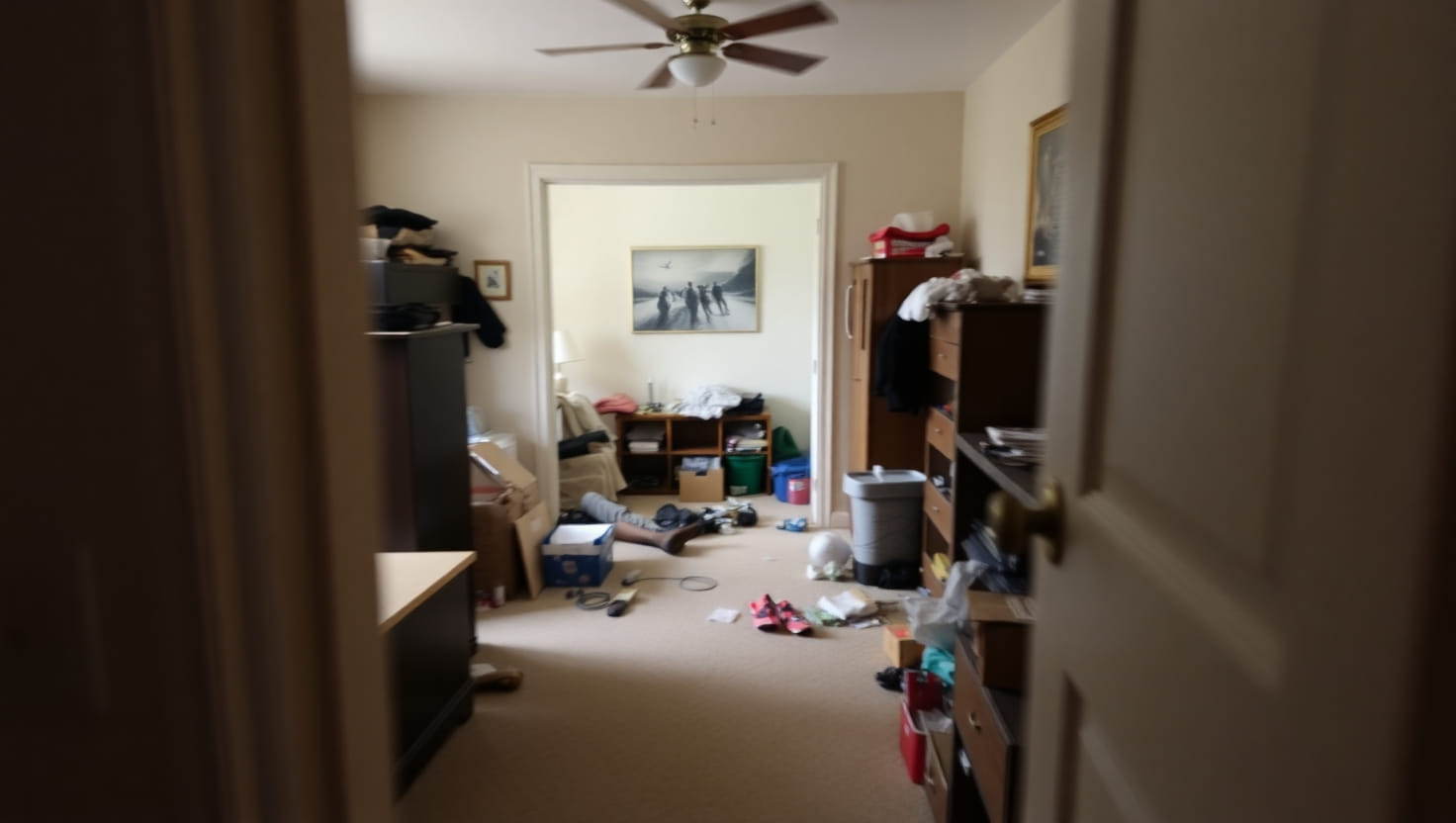
Sometimes the solution is surprisingly simple. A hook behind a desk. A basket near the outlet. A dedicated drawer instead of a shared one.
When cords are stored according to how often they matter, they stop resurfacing as clutter. They settle into the background, which is exactly where functional items belong.
Avoid over-organizing before the system proves itself
This is the moment many people reach for containers, labels, and matching solutions. And sometimes that’s helpful. But it’s rarely helpful before the system has had time to exist.
Right now, your job is to notice what’s working.
Are cords staying where you put them? Are you finding what you need without frustration? Are certain areas staying calmer without constant adjustment?
If yes, let it be imperfect. Temporary solutions often teach you more than finished ones.
If something isn’t working, adjust one small thing. Change the location. Reduce the number of cords in that zone. Simplify the setup.
Organizing tools are most useful when they support a pattern that already makes sense to you. When you wait, you avoid locking yourself into a system that looks good but feels annoying to maintain.
Wires don’t need a lot of structure. They need the right amount. And the right amount usually reveals itself after you’ve lived with the setup for a bit.
Let wire decluttering stay contained to protect your energy
One quiet benefit of approaching wires this way is that it keeps the task from spreading.
It’s easy for a cord project to turn into moving furniture, reorganizing drawers, or questioning every device you own. That’s when energy drains fast.
You’re allowed to stop at “better than before.”
If one outlet area feels calmer, that’s enough for now. If a single bin of cords makes sense, that’s progress you can trust.
Wire clutter tends to resurface when it’s treated as something you must conquer all at once. When it’s treated as maintenance, it becomes manageable.
You can return to this later. Or not. The work you’ve done still counts.
By keeping the scope small and the pace gentle, you make it far more likely that the changes will hold. And that, more than perfect organization, is what actually brings relief.
Work room by room instead of category by category
When wire clutter feels overwhelming, it’s often because it’s scattered across the entire house. Phone chargers in the bedroom, old cables in the office, extension cords in the closet, random adapters in a kitchen drawer. Looking at them as one category makes it feel endless.
A room-by-room approach is gentler.
When you focus on one room, the decisions stay grounded in context. You can see which cords actually serve that space and which ones wandered there by accident. That clarity is harder to access when everything is piled together.
In each room, you can repeat the same quiet pattern: notice what’s actively used, contain what belongs, relocate what doesn’t.
Because the process is familiar, it gets easier as you go. Your brain doesn’t have to relearn the task each time. It simply applies the same logic in a new setting.

This also protects your energy. You can stop after one room without feeling like you’ve left things half-done. Each space you touch becomes a little calmer on its own.
Wire clutter responds well to this kind of contained attention. It doesn’t demand a sweeping solution. It settles when it’s handled close to where it lives.
Be honest about devices that quietly left your life
Some cords stick around because the device they belong to left slowly. A speaker you stopped using. A camera that never made the move to your new routine. A printer that was replaced but never fully retired in your mind.
When that happens, the cord becomes a placeholder for a past version of your life.
You don’t need to judge that. It’s normal. Technology changes faster than our sense of closure.
If you notice a cord that belongs to a device you haven’t touched in years, pause there. Not to force a decision, but to acknowledge the shift. Your home already adapted. The cord just didn’t get the memo.
Sometimes simply naming that truth makes the next step easier. Other times, it helps to place that cord in a short-term holding area rather than keeping it in general storage.
The key is honesty without pressure. You’re not required to let go immediately. You’re allowed to recognize that something no longer fits the way it once did.
That awareness alone lightens the clutter. It separates memory from function, which is often what wires blur together.
Set gentle limits so cord storage doesn’t sprawl again
Even the best cord system can slowly expand if it doesn’t have edges. A bin becomes two. A drawer starts to overflow. Suddenly the clarity you created fades.
This is where limits help, not as rules, but as containers for decision-making.
Choose a size for your cord storage and let that size guide you. One bin. One drawer. One shelf. When it fills, that’s a signal to review, not a failure.
Limits make future choices easier. Instead of asking “Do I keep this?” you ask “Does this deserve space here more than something else?”
That question is quieter and more practical.
If you find yourself consistently bumping against the limit, you can adjust it. The goal isn’t restriction. It’s awareness.
Wire clutter stays manageable when it’s held in a space that reflects how much attention you’re willing to give it. Anything beyond that tends to pull energy you don’t want to spend.
Notice how fewer wires change how a space feels
As cords settle into clearer roles, something subtle often happens. The room feels easier to be in.
This isn’t about visual perfection. It’s about reduced background tension. Fewer things tugging at your awareness. Fewer micro-decisions waiting for you every time you sit down or walk through.
You might notice: cleaner surfaces, clearer pathways, a sense that the room is “done” instead of pending.

These shifts matter because they reinforce the value of what you’ve done without demanding more effort.
Wire decluttering is one of those tasks where small changes have an outsized emotional effect. When cords stop dominating edges and corners, the space feels more intentional, even if nothing else changed.
Let yourself register that difference. It helps your nervous system associate decluttering with relief rather than depletion.
Allow maintenance to replace big cleanups
Once wires are mostly where they belong, the work changes. It becomes maintenance instead of projects.
A new device comes in. An old one leaves. A charger moves rooms. These are normal transitions, not signs that your system failed.
Maintenance might look like: returning a cord to its bin, replacing one cable instead of adding another, doing a quick check when something feels off.
This kind of upkeep is light because it’s responsive. You’re adjusting in real time rather than waiting for overwhelm to build.
When wire clutter is handled this way, it stops cycling back into chaos. It stays flexible, which is important in a home that actually gets used.
You don’t need to revisit everything at once. You only need to respond when something no longer fits. That’s usually enough to keep the calm you’ve already created.
When the issue isn’t the wires themselves
Decluttering wires often reveals something quieter underneath. You can put systems in place, choose good homes, even maintain them for a while—and still feel like clutter slowly creeps back. That doesn’t mean you failed, or that you didn’t try hard enough. It usually means the approach didn’t match how your life actually moves. Many people reach a point where they realize the problem was never motivation or discipline. It was fit. Understanding that difference can shift everything, not just with cords, but with decluttering as a whole.