Decluttering Where to Start: A Calm, Grounded Way to Begin Without Overwhelm
A steady, pressure-free approach to decluttering where to start, designed for overwhelmed homes and tired minds.
If you’re searching for decluttering where to start, it usually means the clutter feels heavier than the space itself. Not just messy, but loud. Mentally crowded. Hard to even look at without wanting to step away.
This isn’t a plan to fix everything. It’s not a challenge, a checklist, or a promise of transformation. It’s a quieter orientation point. A way to understand where beginning actually makes sense when energy is limited and decisions feel expensive.
You don’t need motivation here. You don’t need momentum. You don’t even need time carved out.
You’re allowed to read this slowly, or stop partway through. Nothing here depends on finishing. This is simply a place to settle before doing anything at all.
Why “Where to Start” Feels Harder Than the Decluttering Itself
The question of decluttering where to start often feels more paralyzing than the clutter. That’s because starting isn’t a physical problem. It’s a cognitive one.
When everything feels undone, your brain tries to solve the whole picture at once. Every pile represents a decision. Every room holds unfinished thought loops. The result isn’t laziness or avoidance. It’s overload.
Most decluttering advice skips this part. It assumes clarity exists and just needs direction. But when clarity is missing, being told to “pick a room” or “start small” can actually increase tension. The mind still sees everything else waiting.
What’s often needed first is not action, but containment. A way to mentally narrow the field so your nervous system can stand being present in the space. Until that happens, any starting point feels arbitrary, and arbitrary choices are hard to trust.
Understanding this shifts the question. Decluttering where to start becomes less about location and more about cognitive safety. Where can you begin without your mind immediately racing ahead to everything else?
That’s the kind of starting point that lasts.
Separating Visual Clutter From Decision Clutter
One reason decluttering where to start feels confusing is that not all clutter functions the same way. Some clutter is visual. Some is decisional. They overlap, but they exhaust you differently.
Visual clutter is what you see. Stacks, surfaces, crowded rooms. Decision clutter is what you carry. Unmade choices, postponed sorting, items waiting for a future version of you.
Many people try to address visual clutter first because it feels urgent. But if the underlying decision clutter remains untouched, the relief doesn’t last. The space looks better, yet the pressure returns quickly.
Starting becomes easier when you notice which type of clutter is draining you most right now. If it’s visual, you may need fewer decisions and more simple removal. If it’s decisional, you may need permission to stop deciding altogether for a while.
This isn’t about doing it the right way. It’s about matching the starting point to your current capacity. Decluttering where to start isn’t universal. It’s contextual.
When you align your starting place with the kind of clutter that’s weighing on you most, effort drops. Not because the task is smaller, but because it finally fits.
Choosing a Starting Point That Doesn’t Trigger Everything Else
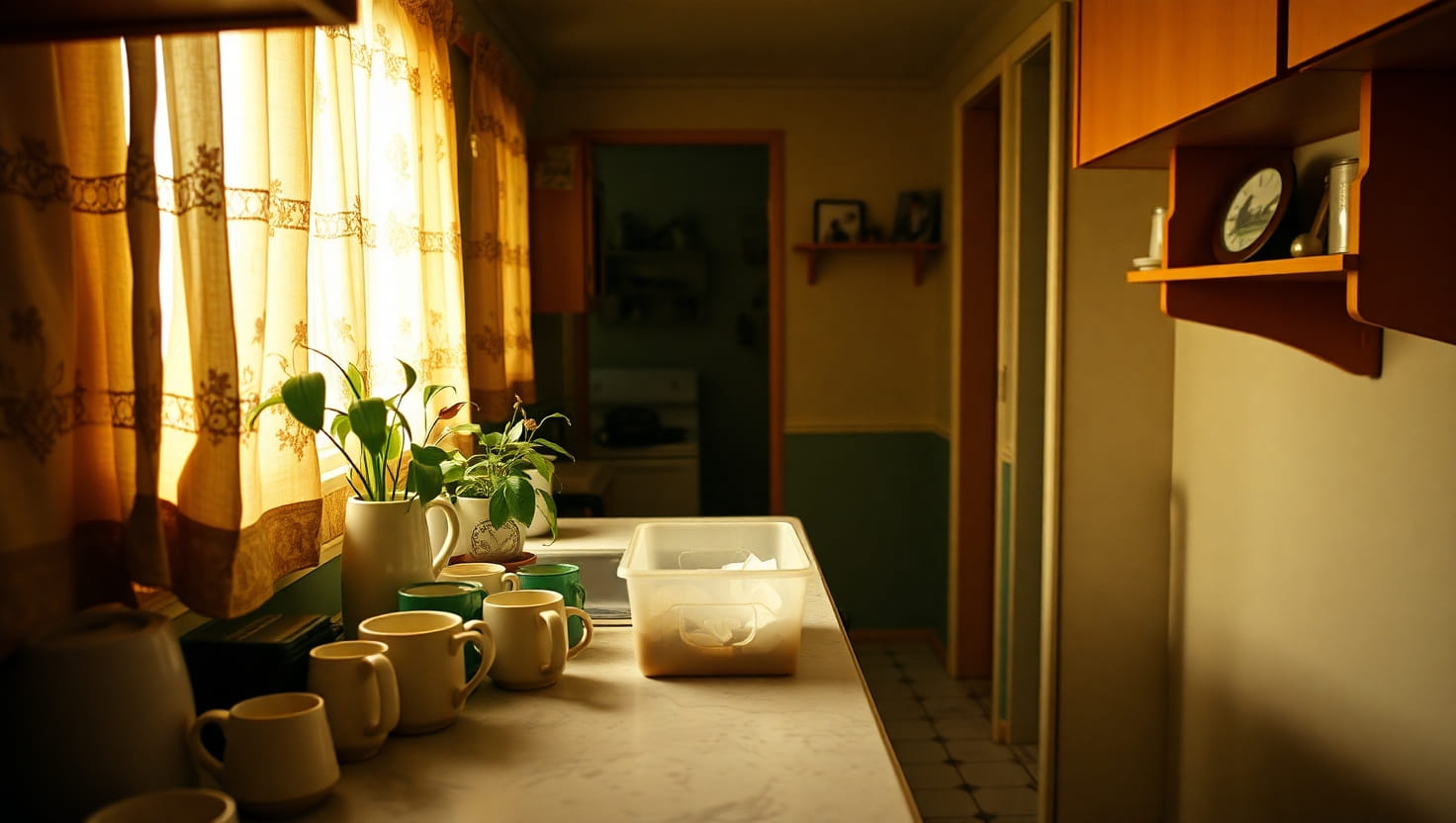
A helpful place to begin decluttering is one that doesn’t mentally open the rest of the house. This matters more than square footage or mess level.
Some areas are psychologically “linked.” Touch one, and your mind jumps to five others. Closets often do this. So do storage spaces and sentimental zones. Starting there can feel like pulling a loose thread you’re not ready to follow.
Instead, look for a contained area with clear edges. A drawer that closes. A shelf that holds one category. A surface used for one purpose. These spaces limit mental spillover.
Decluttering where to start works best when the starting point doesn’t require future planning. You don’t need to know where things will live long-term. You don’t need a system. You only need to interact with what’s directly in front of you.
This kind of beginning builds trust. Not motivation. Trust. Your brain learns that engaging with clutter doesn’t automatically mean escalation.
That trust is what allows you to return later. Quietly. On your own terms.
Letting “Temporary” Be a Valid State
One hidden blocker in decluttering where to start is the belief that every decision must be final. Keep or donate. Store or discard. Forever choices.
That expectation adds weight to even the smallest area. It turns simple handling into identity-level evaluation. No wonder starting feels heavy.
Temporary decisions reduce that load. They allow movement without commitment. An item can be undecided and still be moved. A space can be calmer without being complete.
This doesn’t mean avoiding decisions indefinitely. It means respecting timing. Some items need distance before clarity appears. Some categories resolve themselves only after other areas settle.
When temporary is allowed, starting points multiply. You’re no longer searching for the perfect place to begin. You’re choosing a place where nothing irreversible is required.
Decluttering where to start becomes less about courage and more about gentleness. And gentleness tends to invite consistency.
When the Best Starting Point Isn’t a Place at All
Sometimes the right answer to decluttering where to start isn’t a room, a drawer, or a category. Sometimes it’s a pause.
This can look like noticing which spaces you avoid walking into. Or which piles you step around without seeing anymore. Awareness without action still counts as orientation.
It can also look like removing one item that clearly doesn’t belong. Not as a strategy, but as a signal. A way of telling yourself that change doesn’t have to arrive in bulk.
Starting this way doesn’t produce dramatic visuals. It produces internal permission. The sense that nothing bad happens when you engage a little.
From there, actual decluttering becomes less loaded. Not easier, necessarily. But steadier.
And steadiness is usually what people are really asking for when they wonder where to start.
Starting With What You Touch Every Day
When deciding decluttering where to start, it often helps to look at what your hands already know. The objects you touch daily carry less mystery. They don’t require memory digging or future planning. They simply exist in use.

These areas tend to be quieter places to begin. A kitchen counter where mail lands. A bedside table. The spot where keys are dropped. Because these spaces are already part of your routine, adjusting them doesn’t feel like introducing a new project. It feels like easing friction in something that’s already happening.
What matters here isn’t volume. It’s familiarity. Familiar items don’t ask you to re-evaluate your identity or your aspirations. They ask simpler questions. Does this still belong here. Does this still serve how this space is used now.
Starting with daily-touch areas also creates subtle feedback. You notice the change without needing to remember it. Each time you use the space, the absence of excess registers quietly. That quiet is often more motivating than visible progress elsewhere.
Decluttering where to start becomes less abstract when the starting point meets you in motion. You’re not carving out extra energy. You’re redirecting a small amount of attention that’s already there.
Why Storage Areas Often Make Poor First Choices
It’s common to assume that storage spaces are logical starting points. Closets, basements, spare rooms. They’re out of sight, and dealing with them feels responsible. But for many people, these are the hardest places to begin.
Storage areas compress time. They hold past versions of life alongside imagined futures. When you enter them, you’re not just sorting objects. You’re navigating history and expectation at the same time.
This is why decluttering where to start rarely goes well when it begins in storage. The decisions required are heavier. Each item asks larger questions. What if I need this later. What if I regret letting it go. Who was I when I kept this.
There’s no benefit in starting where the emotional cost is highest. That doesn’t build momentum. It drains it.
This doesn’t mean storage should be avoided forever. It means timing matters. Storage areas respond better when you already trust your judgment from easier wins elsewhere. When your sense of “enough” has recalibrated.
Beginning outside of storage isn’t avoidance. It’s sequencing. And good sequencing makes the entire process feel more humane.
Letting Function Lead Instead of Categories
Another common sticking point in decluttering where to start is category thinking. Clothes. Papers. Books. Categories are tidy in theory, but in practice they sprawl across rooms and storage areas.
Function is often a gentler guide. Instead of asking what type of item something is, you ask what it helps you do. Eat. Rest. Work. Get ready. Leave the house.
Functional zones tend to be contained naturally. A workspace. A coffee-making area. A grooming space. These zones have clearer boundaries and clearer success markers. When the function works more smoothly, you feel it immediately.
This approach also reduces comparison. You’re not measuring your wardrobe against an ideal. You’re noticing whether getting dressed feels easier. You’re not organizing papers perfectly. You’re reducing friction in paying bills or finding information.

Decluttering where to start becomes less about organizing and more about supporting daily life as it actually exists. Not as it’s supposed to.
Function-led starting points are forgiving. They allow imperfect solutions. And imperfect solutions are often the ones that stick.
When Sentimental Items Aren’t the Real Problem
Many people believe sentimental items are the main obstacle in decluttering where to start. They anticipate emotional overwhelm and delay beginning at all. But sentimentality is often blamed for a different issue.
What’s usually exhausting isn’t the memory. It’s the pressure to decide its importance right now.
Sentimental items ask for presence. They don’t respond well to rushed energy or goal-oriented sorting. That doesn’t make them impossible. It makes them inappropriate as a first step.
By starting elsewhere, you’re not avoiding emotion. You’re preparing for it. You’re practicing decision-making in lower-stakes areas so that when you do encounter sentiment, your nervous system is steadier.
It’s also worth noting that many items labeled sentimental don’t require immediate resolution. Some simply need better containment. A box. A boundary. A place where they can rest without demanding attention.
Decluttering where to start improves when sentiment is treated as something to approach deliberately, not something to conquer early. Respecting that pacing protects both the memories and your energy.
Using Energy Levels as a Map
One overlooked guide in decluttering where to start is your own energy pattern. Not motivation. Actual energy. Physical, mental, emotional.
Some tasks require standing and moving. Others require sitting and deciding. Some are better for quiet mornings. Others for restless afternoons. Matching the task to the energy you have changes the entire experience.
This means the starting point can shift from day to day. And that’s not inconsistency. It’s responsiveness.
On low-energy days, starting might mean removing obvious trash. On clearer days, it might mean grouping similar items without deciding their fate. Both count.
When energy leads, resistance drops. You stop forcing yourself into an ideal process and begin working with the reality of your capacity.
Decluttering where to start stops being a fixed answer and becomes a flexible one. And flexibility is often what allows people to continue, rather than burn out.
This way of beginning doesn’t look impressive from the outside. But it feels sustainable from the inside.
Allowing One Clear “No” to Create Momentum
Sometimes decluttering where to start becomes simpler when you stop looking for yeses. One clear no can create more movement than a pile of careful maybes.
A clear no is an item that no longer fits your life in any realistic way. Not aspirationally. Not emotionally. Practically. Clothing that doesn’t suit your body or routine. Tools for hobbies you’ve already released. Duplicates you never reach for.
These items don’t require deep reflection. They don’t ask you to weigh identity or memory. They register as complete. And that completeness matters.
Starting with one clear no reduces cognitive strain. Your mind doesn’t brace itself for regret or second-guessing. It experiences a decision that closes cleanly. That experience subtly recalibrates how hard you expect decluttering to be.

This is why searching for obvious discards isn’t about efficiency. It’s about safety. You’re showing yourself that not every choice will linger.
Decluttering where to start often improves when you narrow your attention to what’s already resolved inside you. You’re not forcing readiness. You’re noticing it.
From there, additional clarity tends to surface on its own. Not because you pushed for it, but because you made room for it to appear.
Why Starting Small Isn’t About Size
“Start small” is common advice, but it’s often misunderstood. In decluttering where to start, small doesn’t mean insignificant. It means contained.
A small starting point is one that limits consequences. One drawer instead of a whole room. One shelf instead of an entire closet. Not because the area is easy, but because the scope is clear.
When scope is unclear, your mind keeps track of unfinished edges. It holds open loops. That tracking consumes more energy than the actual sorting.
Contained spaces close loops quickly. You begin. You end. The boundary is visible. That sense of completion restores confidence without requiring momentum.
This is different from doing something “quick.” A contained space can take as long as it takes. Time pressure isn’t the point. Resolution is.
Decluttering where to start becomes less intimidating when you choose a space that allows for a natural stopping point. Not an artificial one, but one built into the structure of the space itself.
This kind of small beginning doesn’t ask you to build habits or systems. It simply lets you finish something. And finishing something, quietly and fully, changes how the rest of the work feels.
Noticing the Difference Between Messy and Unusable
Another way to clarify decluttering where to start is to notice which spaces are merely messy and which are actively unusable. Messy spaces can still function. Unusable ones create friction every time you interact with them.
An entryway where you can’t set things down. A table you can’t eat at. A desk you can’t work on. These spaces interrupt daily flow, even if the rest of the house is cluttered too.
Starting with unusable spaces often provides relief disproportionate to the effort involved. You’re not improving aesthetics. You’re restoring access.
This distinction matters because it shifts the goal. You’re not aiming for order. You’re aiming for usability. That’s a lower bar, and a more humane one.
When you restore function, you also reduce the mental noise attached to the space. It stops demanding attention. It stops being a problem you carry around.
Decluttering where to start becomes clearer when you ask a simpler question. Where does clutter actively interfere with living right now.
That answer tends to be obvious once you look for it. And obvious answers are easier to act on without debate.
Letting Neutral Spaces Go First
Neutral spaces are areas that don’t carry much emotional charge. Hallways. Utility areas. Shared surfaces. They’re rarely anyone’s favorite, but they’re also rarely loaded with identity.

These spaces often make good starting points in decluttering where to start because they don’t ask much of you emotionally. You can move items through them without pausing to reflect on who you were or who you might become.
Working in neutral spaces builds familiarity with the process itself. You practice sorting, relocating, discarding. You notice how your body responds. You learn where you tend to hesitate and where you move easily.
That information is valuable. It prepares you for more complex areas later, without the pressure of high-stakes decisions.
Neutral spaces also tend to be transitional. Improving them smooths movement through the home. That subtle improvement is felt repeatedly throughout the day.
Decluttering where to start doesn’t always need to be personal to be meaningful. Sometimes the least emotionally charged spaces provide the most stable entry point.
They let you engage with clutter as a practical matter first. And for many people, that’s the safest way back in.
When Stopping Is Part of the Starting Strategy
One counterintuitive aspect of decluttering where to start is knowing when to stop early. Not because you failed, but because you reached your current edge.
Stopping while things still feel manageable preserves trust. Pushing past that point often teaches your nervous system that decluttering equals depletion. That association makes returning harder.
A short, contained session that ends with energy left over does more for long-term progress than an extended one that leaves you drained. The body remembers the ending more than the effort.
This doesn’t require tracking time or setting strict limits. It requires noticing when clarity begins to fade. When decisions slow. When irritation creeps in.
Choosing to stop then isn’t quitting. It’s calibrating.
Decluttering where to start is closely tied to decluttering where to pause. Both determine whether the process feels safe enough to repeat.
When stopping is allowed, starting becomes less loaded. You’re no longer bracing for exhaustion. You’re entering something that respects your capacity.
And that respect is often what makes continuation possible, later, without force.
If You’re Wondering How to Make This Last
For many people, the hardest part of decluttering isn’t starting. It’s watching things slowly return and wondering what went wrong. That’s not a failure of effort. It’s usually a mismatch between the process and real life.