How to Declutter When Overwhelmed: A Calm, Realistic Way to Start Without Burning Out
A steady, pressure-free approach to decluttering when everything feels like too much and you don’t know where to begin.
If you’re feeling overwhelmed by clutter, this is not a sign that you’ve failed or fallen behind. It’s usually a sign that too much is asking for your attention at the same time.
Most decluttering advice assumes you have spare energy, clear focus, and emotional distance from your stuff. When you’re overwhelmed, none of that is true. Your brain is already working hard just to get through the day. Adding big decisions or rigid systems on top of that can make everything feel heavier.
This article is not about fixing your home quickly. It’s about understanding why decluttering feels impossible right now, and how to approach it in a way that doesn’t demand more from you than you have to give.
You don’t need motivation to read this. You don’t need a plan. You don’t even need the intention to start.
This is simply a place to slow the problem down enough that it becomes less loud.
Why Decluttering Feels Impossible When You’re Overwhelmed
When you’re overwhelmed, clutter stops being a physical issue and turns into a mental one. Every object carries extra weight because your brain is already overloaded.
What often looks like procrastination is actually protection. Your nervous system senses that making decisions, sorting categories, or confronting unfinished intentions could push you past your limit. So it resists. Not because you’re lazy, but because it’s trying to keep you functioning.
Decluttering advice rarely accounts for this. It treats overwhelm as something you can push through with better discipline or a stronger system. In reality, overwhelm changes how your brain processes information. Choices feel heavier. Transitions feel harder. Even small tasks can trigger a sense of panic or shutdown.
This is why starting is often the hardest part. Not because you don’t know what to do, but because everything feels equally urgent and equally exhausting. There’s no clear entry point, so your mind keeps circling without landing anywhere.
Understanding this matters because it removes the pressure to “just start.” If your brain is overloaded, forcing action usually backfires. It increases resistance and reinforces the feeling that decluttering is unsafe or punishing.
The goal, at this stage, is not progress. It’s reducing the sense of threat around the task itself.
The Hidden Cost of Starting With Big Decluttering Goals
When you’re overwhelmed, big goals don’t inspire action. They amplify fear. A goal like “declutter the house” or even “declutter the bedroom” asks your brain to imagine dozens of decisions, emotional moments, and unfinished steps all at once.
Your mind fills in the blanks with worst-case scenarios. Running out of time. Making the wrong choice. Regretting what you let go of. Creating a bigger mess than the one you started with. None of this is dramatic. It’s simply how a tired brain tries to predict risk.
This is why broad decluttering goals often lead to avoidance. The scope is too large to feel safe. Even breaking it into categories can still feel like too much when every category is emotionally loaded.
What’s rarely acknowledged is that overwhelm narrows your usable capacity. You may technically have an hour free, but only ten minutes of mental clarity. Planning as if you have access to all of yourself creates a mismatch that leads to frustration.
A calmer approach starts by letting go of outcome-based goals altogether. Not permanently, but for now. When the focus shifts away from “how much can I get done,” your nervous system has room to settle.
Once the pressure lifts, even slightly, movement becomes possible again. Not dramatic movement. Quiet, unremarkable movement. The kind that doesn’t require courage or momentum.
That’s where real change begins.
How Overwhelm Distorts Decision-Making Around Your Stuff
Overwhelm doesn’t just make decluttering feel harder. It actively changes how you see your belongings.
Items you might normally sort without emotion suddenly feel loaded with meaning. Ordinary objects start carrying guilt, obligation, or the weight of past versions of yourself. Things you intended to use, fix, or become feel louder when your capacity is low.
At the same time, decision fatigue sets in quickly. Each choice drains a little more energy, even if the choice is small. Keep or donate. Put away or leave out. Decide now or later. When you’re overwhelmed, your brain treats each of these as equally demanding.
This often leads to two common patterns. The first is freezing. You stand in front of a space and feel unable to move anything, even though you want relief. The second is over-purging, where you get rid of too much too quickly just to escape the discomfort, and later feel regret or grief.
Neither pattern means you’re bad at decluttering. They’re both signals that your system is under strain.
The gentler approach is to delay decisions rather than force better ones. Creating breathing room matters more than making perfect choices. When overwhelm eases, clarity usually follows on its own.
You don’t need to trust yourself more. You need to ask less of yourself at once.
The Role of Pace When You’re Decluttering in a Fragile Season
Pace is one of the most overlooked parts of decluttering, especially during overwhelming periods of life. Most advice focuses on efficiency, but speed is not neutral. For an overwhelmed nervous system, moving too fast can feel unsafe.
A slower pace isn’t about dragging things out. It’s about staying regulated enough to continue. When the pace matches your current capacity, your body doesn’t have to brace itself. You’re less likely to shut down, snap, or abandon the process altogether.
This is why short, incomplete sessions are often more effective than long, ambitious ones. Stopping before exhaustion hits builds trust. It teaches your brain that decluttering doesn’t always end in depletion.
There’s also emotional pacing to consider. Some items carry more history than others. Touching them too early can derail the entire session. Allowing yourself to work around those areas is not avoidance. It’s intelligent sequencing.
A fragile season asks for containment, not transformation. The aim is to keep your environment from adding stress, not to make it perfect.
When pace is respectful, decluttering stops feeling like a test of endurance and starts feeling neutral. And neutrality is often the first step toward relief.
Creating Safety Before You Try to Create Order
Before order can exist, there has to be a sense of safety. This applies to physical spaces as much as emotional ones.
If decluttering currently feels tense, exposing, or high-stakes, your system will resist it no matter how good the strategy is. Safety doesn’t come from rules or motivation. It comes from predictability and permission.
Predictability means knowing that you can stop at any point without consequences. That nothing bad will happen if a drawer stays half-done. That you’re not required to finish what you start.
Permission means allowing yourself to interact with your space without judgment. Not every session needs to result in visible improvement. Sometimes safety looks like touching very little and leaving things mostly as they are.
When safety is present, order often follows quietly. You notice what feels off. You return items without overthinking. You make small adjustments without bracing yourself.
This kind of decluttering doesn’t photograph well. It doesn’t produce dramatic before-and-after moments. But it supports real life, especially when your energy is limited.
Order that comes from safety tends to last longer, because it wasn’t forced.
For now, it’s enough to let your home be a place that asks less of you.
Choosing Where to Start Without Triggering More Stress
One of the quiet sources of overwhelm is the pressure to choose the “right” place to begin. When every area feels bad, the decision itself becomes exhausting. Your mind scans for the most urgent spot, the most embarrassing one, or the one that will make the biggest difference, and quickly gets stuck.
A calmer approach is to stop ranking spaces altogether. Instead of asking where you should start, it can help to notice where your attention already goes. Often there’s a small area that keeps tugging at you. Not the worst one. Just the one you notice repeatedly throughout the day.
This might be a chair that collects clothes, a counter you keep clearing and refilling, or a bag you move from room to room. These spaces are already asking for interaction. Starting there reduces friction because you’re not forcing focus where it doesn’t want to go.
The goal isn’t impact. It’s accessibility. A space that feels emotionally neutral is usually a better entry point than one loaded with guilt or history. Neutral spaces allow your brain to practice decision-making without stress.
Starting small in this way doesn’t mean you’ll stay small forever. It simply means you’re choosing an opening that doesn’t require bravery. When overwhelm is present, ease is a more reliable guide than logic.
Why “Finishing” Is the Wrong Measure Right Now
When you’re overwhelmed, the idea of finishing can quietly sabotage your efforts. Completion sounds satisfying, but it also creates pressure. It implies a clear end point, a standard to meet, and a risk of failure if you don’t get there.

Your nervous system hears all of that, even if you don’t consciously think it. As a result, you may avoid starting at all, or push yourself too hard once you do start, just to escape the discomfort of something unfinished.
In this season, it’s often more supportive to remove “finished” from the equation entirely. A decluttering session can be successful without producing a completed space. Success might simply mean that you interacted with your home without escalating stress.
This reframing changes how your body experiences the task. You’re no longer racing toward an end. You’re spending time in the process and leaving before it costs too much.
Unfinished doesn’t mean failed. It means paused. And pausing is what allows you to return later without dread. Over time, these pauses add up to real change, even though no single session looks impressive.
Letting go of the finish line makes decluttering feel less like a test and more like a conversation you can step in and out of as needed.
How to Work With Low Energy Instead of Fighting It
Many decluttering plans assume consistent energy. They rely on momentum, routines, or sustained focus. When your energy is unpredictable or low, these approaches can feel unrealistic and discouraging.
Working with low energy starts by acknowledging that your capacity fluctuates. Some days, even standing and sorting feels like too much. On those days, expecting productivity only adds another layer of stress.
Instead of measuring what you can do, it can be gentler to notice what you can tolerate. Tolerance is quieter than motivation. It asks, “What level of interaction feels okay right now?” That might be touching one item, opening one drawer, or simply noticing what’s there without changing anything.
This kind of engagement keeps the relationship with your space alive without demanding output. It prevents the all-or-nothing pattern where nothing happens for weeks, followed by a burst of exhausting effort.
Low-energy decluttering is not about efficiency. It’s about continuity. Small, tolerable interactions maintain familiarity and reduce the emotional distance that builds when clutter is ignored.
Over time, as energy returns, the groundwork is already there. You haven’t lost momentum, because you never required it in the first place.
Separating Emotional Weight From Physical Objects
When you’re overwhelmed, it can feel as though every object carries emotional weight. Items become symbols of time lost, money spent, or versions of yourself you couldn’t live up to. This makes even simple decisions feel heavy.
One helpful shift is to recognize that the emotion isn’t actually in the object. It’s in the story attached to it. The object is just where the feeling lands.
Trying to resolve those feelings while decluttering often backfires. It asks too much of the moment. Emotional processing requires space and energy, both of which may be limited right now.
Instead, it can help to gently separate sorting from meaning-making. You’re allowed to move an item without deciding what it represents. You’re allowed to store something out of sight without deciding its future.
This creates emotional distance without forcing closure. Distance is often what allows clarity to emerge later, when you’re not overwhelmed.
Decluttering doesn’t have to be a reckoning. Sometimes it’s simply about reducing how much your environment reminds you of unfinished narratives. When the visual noise quiets down, emotional weight often softens on its own.
Letting Decluttering Be Incomplete on Purpose
There’s a quiet strength in allowing decluttering to remain intentionally incomplete. Not because you gave up, but because you chose to stop at a humane point.
Incomplete work sends a different message than abandoned work. It says that you’re in a relationship with your space that respects limits. That you can engage without consuming yourself.
Leaving things partially done can feel uncomfortable at first, especially if you’re used to pushing through. But over time, it builds trust. You learn that nothing bad happens when you stop. The mess doesn’t explode. The progress doesn’t disappear.
This trust makes it easier to return. You don’t associate decluttering with exhaustion or self-criticism. You associate it with containment.
Intentionally incomplete decluttering also mirrors real life. Homes are lived in. Needs change. Decluttering isn’t a project with a final version. It’s an ongoing adjustment.
When overwhelm is present, the most supportive goal is not completion. It’s creating a home that feels less demanding than it did before. Even partial change can do that.
Stopping early is not failure. It’s a form of care.
Using Containment Instead of Full Organization
When you’re overwhelmed, traditional organization can feel like too much. Matching containers, labeling categories, and deciding permanent homes all require a level of clarity that may not be available right now.
Containment is different. It focuses on boundaries rather than systems. Instead of asking where something should live forever, containment simply asks where it can rest for now.
This might look like placing similar items together in a box, basket, or drawer without sorting them further. The purpose isn’t order. It’s reduction. Fewer loose items in fewer places means less visual noise and fewer daily decisions.
Containment works because it respects limited capacity. It creates a pause between chaos and control. You’re not committing to a final setup. You’re creating breathing room.
There’s also emotional relief in knowing that nothing has to be resolved immediately. Items are acknowledged and gathered, not judged or eliminated. This lowers resistance and makes it easier to interact with your space again later.
Over time, contained items often reveal their own patterns. You notice what you reach for and what you don’t. Organization can grow naturally from that awareness, when and if you’re ready.
For now, containment is enough. It makes your home quieter without asking you to make big decisions before you’re ready.
Why Visual Calm Matters More Than Perfect Systems
When overwhelm is present, your eyes are constantly sending signals to your brain. Every visible pile, surface, or unfinished area adds to the background stress, even if you’ve learned to ignore it.
This is why visual calm often brings more relief than perfectly organized drawers. You don’t need ideal systems to feel better. You need fewer things asking for your attention at once.
Visual calm is created by reducing what’s exposed, not by making everything flawless. Clearing one surface, even temporarily, can change how a whole room feels. It gives your mind a place to rest.
This doesn’t mean hiding everything indiscriminately. It means choosing what you want to see when you walk into a space. What feels neutral or supportive can stay visible. What feels loud can be moved out of sight for now.
Perfection is fragile. Visual calm is forgiving. If things get messy again, the sense of relief isn’t lost. You’ve already experienced what a quieter space feels like, and you know it’s possible to return there.
When decluttering is guided by calm rather than ideals, your home starts to work with you instead of against you. That partnership matters more than any system.
Allowing Your Home to Reflect Your Current Capacity
Many people feel pressure to make their homes reflect who they want to be rather than who they are right now. When you’re overwhelmed, this gap can be painful.
Decluttering often brings this tension to the surface. You’re confronted with objects tied to hobbies you don’t have energy for, routines you can’t maintain, or versions of life that no longer fit.
A gentler approach is to let your home reflect your current capacity, not your aspirations. This doesn’t mean giving up on growth. It means acknowledging reality without judgment.
When your space supports how you actually live, daily friction decreases. You’re not constantly reminded of what you’re not doing. Instead, your environment adapts to you.
This might mean keeping things simpler than you once imagined. It might mean storing aspirational items away rather than displaying them. It might mean redefining what “enough” looks like in this season.
Homes are allowed to change as we do. Decluttering doesn’t have to be an identity statement. It can simply be an adjustment that makes life feel a little more manageable right now.
Trusting That Readiness Changes Over Time
One of the quiet fears around decluttering is the idea that if you don’t deal with everything now, you never will. This belief adds urgency that overwhelm can’t support.
Readiness, however, is not fixed. It shifts with energy, circumstances, and emotional bandwidth. What feels impossible today may feel neutral later, without any dramatic intervention.
Trusting this requires patience, especially if you’ve been living with clutter for a long time. But forcing readiness rarely works. It often creates negative associations that make future attempts harder.
When you allow yourself to wait, you’re not avoiding the work. You’re timing it. You’re letting your nervous system settle enough to engage without distress.
This trust changes the tone of decluttering. It becomes something you return to when conditions allow, rather than something that looms over you as unfinished business.
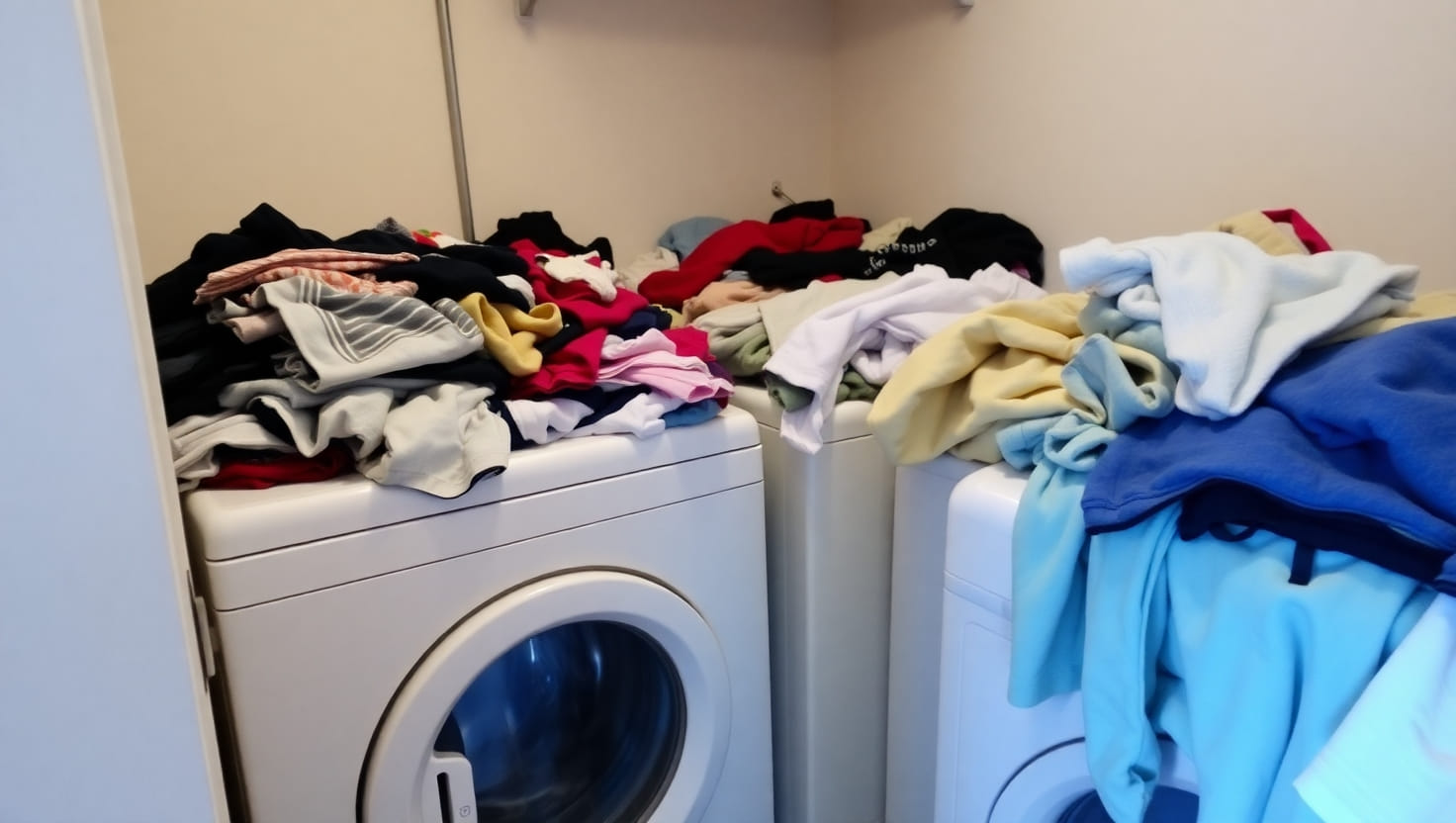
You don’t have to resolve your entire home to prove that you care. The willingness to come back, again and again, in small ways, is often enough.
Letting Decluttering Be Supportive, Not Transformational
Decluttering is often framed as a life-changing event. A fresh start. A turning point. When you’re overwhelmed, this framing can feel unrealistic or even threatening.
Not every season calls for transformation. Some seasons call for support.
Supportive decluttering focuses on reducing friction rather than reinventing your life. It asks what would make mornings slightly easier, or evenings a little quieter. The changes are subtle, but they matter.
This approach removes the pressure to feel inspired or renewed. You’re not required to emerge as a new person. You’re simply making your environment less demanding.
Supportive decluttering also respects that overwhelm may come from many places. Your home doesn’t have to fix everything. It just needs to stop adding to the load.
When decluttering is allowed to be modest, it becomes more accessible. You can engage without bracing yourself for emotional upheaval or dramatic change.
Sometimes the most meaningful shift is barely visible. A little more space. A little less noise. Enough relief to breathe more easily where you are.
When Decluttering Starts to Feel Possible Again
At some point, decluttering stops feeling like something you should do and starts feeling like something you might actually be able to live with. Not all at once. Not perfectly. Just differently.
This usually happens after you’ve spent time lowering the pressure instead of raising it. When you’ve learned what kind of pace you can trust, and what kind of approach doesn’t exhaust you before it helps.
From there, a more sustainable rhythm can begin to form. One that doesn’t rely on motivation or dramatic cleanups, but on patterns that fit real life.
That’s where decluttering has a chance to stick.