How to Start Decluttering Your House (Without Overwhelm or All-Day Cleanups)
A calm, realistic way to begin decluttering your house without pressure, rules, or the need to do everything at once.
If you’re trying to figure out how to start decluttering your house, it usually means something already feels heavy. Not dramatic. Just quietly crowded. The kind of feeling that follows you from room to room, even when nothing looks especially bad.
This isn’t the moment to make a plan for the whole house. It’s also not the moment to decide who you are or aren’t based on the state of your space. Decluttering rarely begins with action. It begins with permission to slow the story down.
Most people stall here because they think starting means committing. Committing to a method. Committing to time they don’t have. Committing to emotional decisions they’re not ready for yet. When that’s the frame, avoidance makes sense.
Starting can be much smaller than that. It can be observational. You can notice which areas feel loud and which ones feel neutral. You can notice what you step around without touching. You can notice where your shoulders tighten.
This kind of noticing doesn’t create mess. It creates orientation. And orientation is what makes the next step feel possible later, instead of urgent now.
You’re not behind for needing this pause. You’re gathering information in a way that doesn’t cost energy. That’s a valid way to begin, even if it doesn’t look like progress yet.
Understanding what makes decluttering feel hard
Before anything is removed from your house, it helps to understand why decluttering feels so difficult in the first place. Most resistance isn’t about laziness or lack of discipline. It’s about overload.
Every object asks something of you. Where does this go. Do I need it. What does it say about me. When there are too many questions stacked together, your brain looks for relief. Avoidance is one of the fastest ways to get it.
There’s also timing. Decluttering often surfaces during already full seasons of life. Work changes. Family shifts. Health issues. Emotional fatigue. When your internal capacity is low, even simple decisions feel expensive.
Then there’s identity. Your house holds evidence of who you were, who you thought you’d be, and what you’re still unsure about. Letting go isn’t just physical. It can feel like rewriting something before you know what the next version looks like.
Recognizing these layers matters. Not so you can push through them, but so you stop arguing with yourself. Decluttering becomes easier when you stop framing difficulty as a personal flaw and start seeing it as a natural response to complexity.
Nothing needs to be solved yet. Understanding alone reduces pressure. And reduced pressure is what allows movement later.
Choosing a starting point that doesn’t backfire
One of the fastest ways to burn out is to start where you think you should, instead of where you actually can. High-visibility areas like kitchens and closets get recommended often, but they’re also dense with decisions.
A better starting point is somewhere emotionally quiet. A drawer you don’t rely on. A surface that collects without being essential. A corner that has become background noise.

These spaces work because the stakes are low. You’re less likely to second-guess yourself. Less likely to uncover complicated emotions. Less likely to feel like stopping means failing.
Starting small isn’t about lowering ambition. It’s about preserving energy. When you finish a contained area, your brain registers completion without exhaustion. That matters more than volume.
It’s also okay if your first starting point isn’t obvious. You might walk through your house a few times before anything stands out. That’s still part of starting. You’re building familiarity with your space as it is, not as you wish it were.
When the starting point feels neutral instead of charged, you’re more likely to continue later. Not because you forced yourself, but because nothing went wrong.
Letting go without making it emotional work
A common fear when learning how to start decluttering your house is that every item will turn into a deep emotional decision. In reality, most items are neutral. They’ve just been waiting quietly.
It helps to separate decluttering from meaning-making at the beginning. You’re not deciding what matters in your life. You’re deciding what stays in this space right now.
Some things will be obvious. Trash. Duplicates. Items that don’t function. These aren’t tests. They’re simple acknowledgments. Taking them out doesn’t require courage or insight.
When you do run into hesitation, you don’t have to resolve it immediately. You can set the item aside without labeling it as sentimental or difficult. Giving yourself that option keeps the process from turning heavy too quickly.
Decluttering becomes emotional work when it’s rushed or total. When everything has to be decided at once, feelings pile up. When you allow pauses, emotions stay proportional.
You’re allowed to move at a pace that keeps you regulated. That’s not avoidance. That’s sustainability. And sustainability is what allows decluttering to continue beyond the first attempt.
Creating momentum without pressure or plans
Momentum doesn’t come from motivation. It comes from safety. When your last experience with decluttering didn’t leave you drained or guilty, your brain is more willing to return.
You don’t need a schedule to create that effect. You need repeatable ease. Short sessions. Clear stopping points. An understanding that stopping is part of the design, not a failure.
It also helps to resist narrating the process too much. You don’t need to decide what this “means” about your habits or your life. You’re simply interacting with your space differently than before.
Over time, these small interactions change how your house feels. Not all at once. Not dramatically. Gradually enough that your nervous system can keep up.
If you’re looking for the right moment to fully begin, this might be it. Not because everything is lined up, but because you’re no longer asking yourself to do it perfectly.
You’re just making it easier to continue.
Working with the house you actually live in
Decluttering advice often assumes a stable, predictable household. Real life is rarely that neat. People come and go. Schedules change. Energy fluctuates. If you wait for a calmer version of life to begin, starting may keep getting postponed.

It helps to work with the house as it functions now, not as you wish it did. This means noticing patterns instead of fighting them. Where do things naturally land when you come home. Which surfaces collect items without intention. Which rooms feel easiest to reset, even briefly.
These patterns aren’t failures. They’re information. They show you how your life moves through the space. Decluttering becomes more effective when it supports those movements instead of trying to correct them.
For example, if shoes pile up by the door, that’s not a discipline problem. It’s a signal that storage or expectations don’t match reality. Adjusting the environment is often gentler than adjusting yourself.
When you accept how your house is being used, decisions become less moral and more practical. You’re not asking how things should work. You’re asking how they already do.
This shift reduces friction. It allows decluttering to feel like a form of listening rather than fixing. And listening takes far less energy than constant self-correction.
Why stopping early can be a good strategy
There’s a quiet pressure to keep going once you’ve started decluttering. To push through while you have momentum. To take advantage of the time. For many people, that’s exactly what leads to burnout.
Stopping early can be a strategy, not a weakness. When you end a session before you’re tired, your brain remembers the experience as manageable. That memory matters more than how much you got done.
Early stopping also protects your decision-making ability. The first few choices tend to be clearer. As fatigue sets in, doubt increases. Ending while things still feel simple keeps decluttering from becoming emotionally loaded.
It can help to decide on a stopping condition instead of a time goal. One drawer. One shelf. One bag out the door. When that condition is met, you stop. No negotiating.
This approach builds trust with yourself. You learn that you won’t push past your limits. Over time, that trust makes it easier to begin again.
Decluttering that respects your capacity tends to repeat itself. Not because you’re more motivated, but because you’re less guarded.
Separating decluttering from organizing
Many people get stuck because decluttering quietly turns into organizing. Containers come out. Categories multiply. Suddenly the process feels complicated again.
Decluttering and organizing solve different problems. Decluttering reduces volume. Organizing arranges what remains. When they’re mixed too early, both become harder.
It’s often easier to start by removing what clearly doesn’t belong, without deciding where everything else will live. This creates space without demanding a full system.
You might notice the urge to “make it nice” as you go. That urge is understandable. Visual order feels reassuring. But it can also slow things down and increase pressure.
Letting a space look temporarily unfinished is part of the process. You’re not failing at organization. You’re sequencing tasks in a way that costs less energy.

Once there’s less to manage, organizing becomes simpler and more intuitive. Until then, it’s enough to focus on what no longer needs to be there.
Keeping this separation clear helps decluttering stay light. You’re not redesigning your home. You’re just giving it some breathing room.
Handling the items you keep avoiding
Every house has a category that gets postponed. Papers. Clothes that almost fit. Gifts you never used. These items tend to carry unresolved decisions, which is why they linger.
Avoidance doesn’t mean you’re incapable of dealing with them. It usually means the decision feels layered. There may be practical questions mixed with emotional ones.
One way to approach these items is indirectly. Instead of deciding their fate, you can gather them. Putting like with like reduces the sense that they’re everywhere.
This step alone can create relief. The items stop interrupting you in multiple places. They become contained, both physically and mentally.
You don’t have to decide when you’ll return to them. Knowing where they are is enough for now. Decluttering doesn’t require immediate resolution of every category.
When you eventually do come back to them, you’ll be approaching from a calmer place. The rest of the house will be quieter. Your capacity may be different.
Avoided items don’t need force. They need timing. Letting them wait without guilt keeps the process intact.
Letting your definition of “enough” change over time
At the beginning, it’s common to have a fixed idea of what a decluttered house should look like. Clear surfaces. Minimal storage. Easy upkeep. These images can be motivating, but they can also become rigid.
Your definition of “enough” doesn’t have to be decided upfront. It can evolve as you go. What felt necessary at first may feel excessive later, or vice versa.
Some people discover they prefer a fuller space with fewer decisions. Others find relief in owning less than they expected. Neither is a failure. They’re responses to lived experience.
Paying attention to how you feel in a space after decluttering is more useful than measuring how much you removed. Relief, neutrality, and ease are better indicators than appearance.
This is why rushing toward an ideal can backfire. If you overshoot your comfort level, you may end up re-accumulating without understanding why.
Allowing your sense of “enough” to be flexible keeps decluttering responsive instead of prescriptive. You’re not trying to reach a finish line. You’re learning what supports you now.
That learning continues quietly, even when you’re not actively decluttering.
Decluttering during seasons when life feels unstable
There are times when decluttering feels harder because life itself isn’t settled. Illness, grief, transition, or ongoing uncertainty can make even small decisions feel weighty. During these seasons, traditional advice often feels out of reach.
It’s important to recognize that decluttering doesn’t have to pause completely, but it does need to change shape. The goal shifts from improvement to containment. From progress to steadiness.
In unstable periods, maintaining what already works is often enough. Clearing just enough space to function. Reducing friction in daily routines. Making the environment slightly easier to move through.
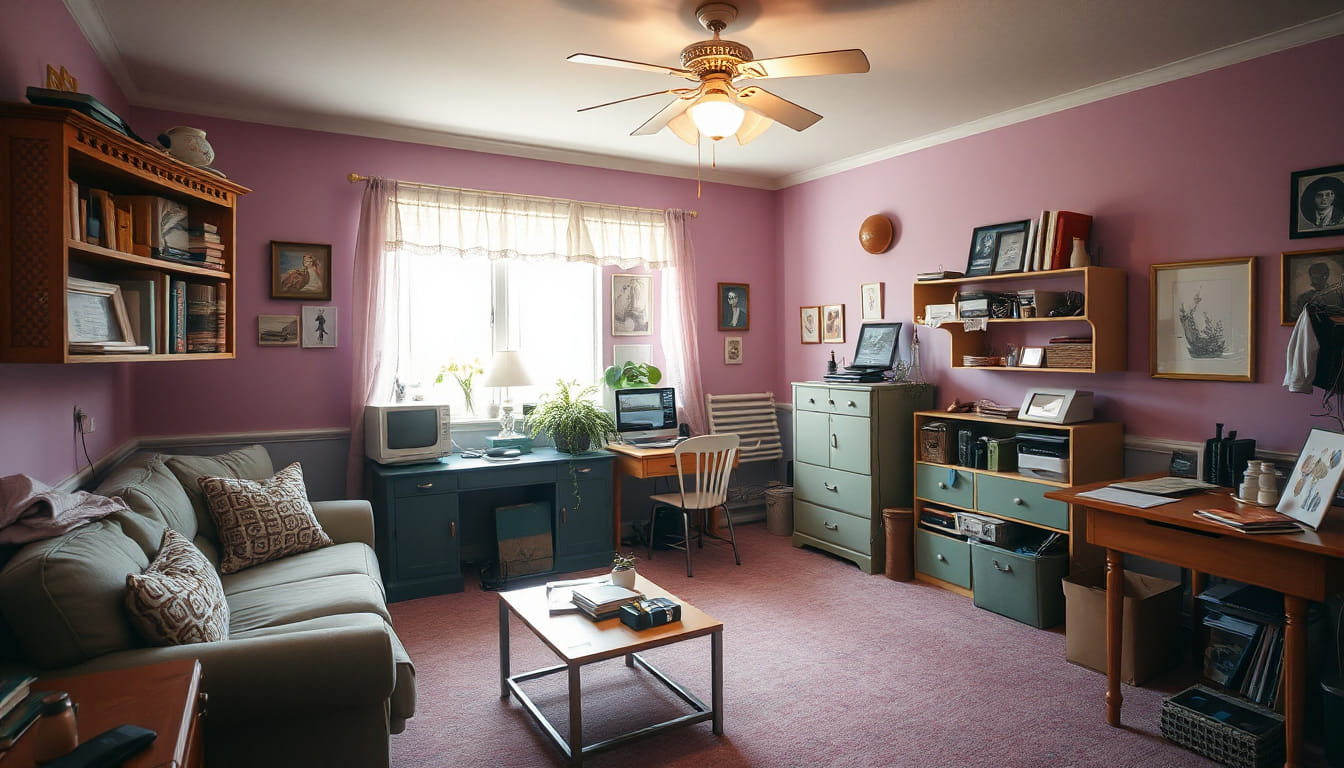
This might look like fewer items on frequently used surfaces, or simplifying one recurring task. It’s not about long-term vision. It’s about short-term relief.
Giving yourself permission to declutter gently during these times protects your energy. You’re not falling behind by doing less. You’re matching the work to your capacity.
Later, when life feels steadier, you’ll have a foundation that didn’t cost you extra stress to build.
How routines can quietly support decluttering
Routines don’t have to be formal to be effective. In fact, the quieter they are, the more likely they’ll last. Decluttering benefits from being attached to existing habits rather than added as a separate task.
You might notice small moments that naturally lend themselves to reset. Putting something away before bed. Clearing one surface before starting your day. Removing one item when you notice it no longer fits your life.
These moments don’t need to be optimized. Their power comes from repetition, not intensity. Over time, they prevent buildup without requiring focused effort.
This kind of maintenance decluttering doesn’t feel like work. It feels like care. And care is easier to return to consistently.
If routines have failed you before, it’s often because they asked too much. Scaling them down until they feel almost insignificant can change that.
Decluttering supported by routine becomes background support rather than a project. It works quietly, without demanding attention.
Navigating other people’s belongings with less friction
Shared spaces add another layer of complexity. When items belong to partners, children, or family members, decluttering can feel politically charged.
It helps to start with what’s clearly yours. This builds momentum without requiring negotiation. It also models the process without imposing it.
When shared areas are involved, focusing on function rather than ownership can reduce tension. What needs to happen easily in this space. What currently gets in the way.
Conversations tend to go better when they’re about ease, not volume. About daily friction, not ideals. Small changes that improve shared routines are often more welcome than large purges.
It’s also okay to accept limits. Not every space will reflect your preferences. Decluttering in shared homes often involves compromise, and that’s not a failure of the process.
Working within these realities keeps decluttering grounded. You’re shaping a livable space, not trying to win control.
Recognizing when decluttering is no longer the problem
Sometimes, clutter persists even after repeated attempts. When that happens, it’s worth asking whether decluttering is still the right focus.
If items keep coming in faster than they leave, the issue may be boundaries rather than volume. If clutter gathers because decisions are postponed, support or simplification elsewhere might be needed.
Decluttering can’t compensate for chronic overload. It can help, but only up to a point. Recognizing this prevents self-blame.
This awareness isn’t a dead end. It’s information. It helps you direct energy where it will actually make a difference.
Sometimes the next step isn’t more decluttering, but adjusting commitments, expectations, or inputs. The house reflects life. When life shifts, space follows.

Understanding this keeps the process compassionate. You’re not failing at decluttering. You’re noticing what it can and can’t do on its own.
Allowing decluttering to remain unfinished
One of the quiet sources of stress is the idea that decluttering needs to be completed. That there’s a final state where the work ends and stays ended.
In practice, homes change. People change. Needs evolve. Decluttering is less like a project and more like a recurring conversation.
Letting it remain unfinished removes pressure. You don’t need to close the loop perfectly. You can pause mid-thought and return later.
This openness makes decluttering easier to live with. It doesn’t demand constant upkeep or vigilance. It adapts as your life does.
When you stop treating unfinished areas as problems, they lose urgency. They become neutral again, waiting without judgment.
Decluttering that allows for incompleteness tends to last longer. It stays flexible. And flexibility is what keeps it from turning into another source of strain.
When decluttering starts to feel different
At some point, decluttering stops being about getting rid of things and starts becoming about how you relate to your space. The pace shifts. The decisions feel less charged. You notice that you’re not starting over in the same way each time.
This is usually where people begin to wonder why some attempts faded while others quietly stayed with them. Not as a failure, but as a pattern worth understanding.
There’s a difference between decluttering that works for a season and decluttering that integrates into real life. When you’re ready to explore that difference, it helps to look at what actually made the change hold.