Overwhelmed by Clutter: Why It Feels So Heavy and What That Weight Is Really Made Of
A calm look at why clutter feels overwhelming, without pressure to fix or change anything yet.
Feeling overwhelmed by clutter often shows up as a practical problem. Too many things. Not enough space. A room that never quite resets. But the heaviness you feel usually arrives before you touch a single object.
That’s because clutter doesn’t live only in piles or drawers. It lives in unfinished decisions, delayed attention, and the quiet awareness that something has been asking for care longer than you’ve had the capacity to give it. The overwhelm comes from carrying all of that at once.
For many people, the moment they notice the clutter is the moment they also notice their own fatigue. Not just physical tiredness, but decision fatigue. Emotional fatigue. The kind that makes even simple choices feel louder than they should.
This is usually where traditional decluttering advice misses the mark. It treats the clutter as the starting point, when in reality the overwhelm came first. The clutter followed.
If you’re overwhelmed by clutter, it doesn’t mean you’ve failed at maintaining your home. It often means your life has been fuller, heavier, or more demanding than the systems you were using could support. The environment simply reflects that mismatch.
Nothing needs to be fixed in this moment. Understanding what the overwhelm is actually made of can soften it slightly. Not to solve it, but to make it feel less personal. Less like a flaw. More like a signal that something has been carrying too much for too long.
How clutter quietly turns into mental noise
Clutter rarely announces itself all at once. It accumulates quietly, in small moments where attention is pulled elsewhere. A bag set down for later. A decision postponed. A surface that becomes a temporary holding place and stays that way.
Over time, those small pauses stack. What you’re left with isn’t just visual mess, but a constant low-level hum of things not finished. That hum is what many people describe when they say they feel overwhelmed by clutter.
Each item carries a question, even if you’re not consciously asking it. Where does this go. Do I need this. Why haven’t I dealt with this yet. When there are too many of those questions open at once, your brain stays in a state of mild alert.
This is why clutter can feel draining even when you’re not actively thinking about it. The mental energy is being used just to coexist with it. You step around it. Work around it. Avoid certain areas. All of that requires effort.
What’s important to notice is that this response is protective, not lazy. Your mind is trying to conserve energy by not engaging fully with something that feels too big to resolve quickly. The overwhelm is a boundary, not a failure.
Seeing clutter as mental noise rather than a housekeeping issue can shift how heavy it feels. It becomes easier to understand why motivation alone never seems to solve it. The issue was never motivation. It was overload.
Why motivation disappears when you’re overwhelmed by clutter
One of the most confusing parts of being overwhelmed by clutter is the loss of motivation. You may genuinely want your space to feel calmer, yet feel unable to start. This often gets misread as procrastination or lack of discipline.

In reality, motivation tends to disappear when the task feels undefined or emotionally loaded. Clutter carries history. It holds reminders of money spent, intentions that changed, versions of yourself that no longer fit. Facing it means facing all of that at once.
When your nervous system senses that level of complexity, it doesn’t generate motivation. It generates avoidance. That’s a normal response to perceived overload.
This is why advice that focuses on “just starting” can feel jarring. Starting isn’t the hard part. Feeling safe enough to start is. Without that sense of safety, every attempt requires force, and force is exhausting to sustain.
Motivation also fades when there’s no clear internal endpoint. If you don’t know what “done” would even look like, your brain has nothing to work toward. So it opts out.
None of this means you don’t care. It usually means you care enough that the weight of doing it wrong feels heavier than the relief of doing it at all.
Understanding this can loosen the self-criticism that often rides alongside clutter. The issue isn’t willpower. It’s that the task has become emotionally and cognitively oversized. Motivation tends to return only after the task feels smaller, safer, and more defined.
The hidden role of timing in clutter overwhelm
Timing is one of the least discussed factors in decluttering, yet it plays a quiet but powerful role. The same amount of clutter can feel manageable in one season of life and completely overwhelming in another.
When energy is already being used for caregiving, work transitions, health concerns, or emotional processing, there’s less available for environmental maintenance. Clutter grows not because attention disappears, but because priorities shift toward survival and stability.
Later, when things slow down even slightly, the accumulated clutter can feel shocking. It looks like something that happened suddenly, even though it formed gradually. This mismatch between expectation and reality often intensifies the overwhelm.
People are especially hard on themselves during these moments. They look at the clutter and assume it means they’ve been neglectful. In truth, it often means they were attentive to something else that mattered more at the time.
Timing also affects decision-making capacity. What felt like a neutral choice years ago may feel emotionally charged now. Objects outlast the circumstances they were acquired for, and sorting through them requires revisiting old contexts.
Recognizing the role of timing doesn’t remove the clutter, but it reframes it. The mess becomes evidence of a life lived through changing demands, not a personal shortcoming.
When overwhelmed by clutter, it can help to consider not just what accumulated, but when. That perspective alone can soften the urgency and reduce the sense that everything should have been handled differently.
How expectations quietly intensify clutter stress
Clutter feels heavier when it rubs against an internal standard. Often, that standard isn’t consciously chosen. It’s absorbed over time from images, advice, and cultural ideas about what a home is supposed to look like.

When your space doesn’t match that image, the discomfort isn’t just about the mess. It’s about the perceived gap between who you are and who you think you should be. That gap creates tension, and tension amplifies overwhelm.
This is especially true if you’re overwhelmed by clutter but still functioning well in other areas of life. The contrast can create confusion and shame. You may wonder why this one area feels so hard when others don’t.
Expectations also tend to be all-or-nothing. Either the space is calm and orderly, or it’s a problem. There’s rarely room in that framing for in-between states, maintenance seasons, or partial functionality.
Under that pressure, even small messes feel symbolic. A crowded counter can start to represent being behind, disorganized, or incapable, even when none of that is actually true.
Noticing the role of expectation doesn’t require lowering standards or giving up on change. It simply introduces flexibility. It allows the space to be seen as responsive to real life, rather than a constant performance.
When expectations soften, clutter often feels less accusatory. It becomes something you can look at without immediately evaluating yourself. That shift alone can reduce the intensity of overwhelm, making room for a calmer relationship with your environment—at whatever pace feels right.
Why clutter feels personal even when it isn’t
Clutter has a way of feeling like a character judgment. Two people can live with the same amount of mess, yet only one feels weighed down by it. That difference usually has less to do with tolerance and more to do with meaning.
When you’re overwhelmed by clutter, objects often stop being neutral. They start to feel like evidence. Evidence of unfinished intentions. Evidence of not keeping up. Evidence of something slipping. Even everyday items can take on emotional charge when they linger longer than expected.
This is partly because our homes are extensions of identity. They hold our routines, our values, and our sense of self. When the space feels chaotic, it can feel like a reflection of internal disorder, even if your inner life is actually thoughtful and capable.
Clutter also tends to gather in visible places. That visibility makes it harder to ignore, and repeated exposure reinforces the feeling that something is wrong. Over time, the emotional reaction becomes automatic.
What’s important to notice is that this personalization happens quietly. You don’t decide to take clutter as a verdict on yourself. It just happens through repetition and proximity.
Separating your sense of self from the state of your space is not about pretending clutter doesn’t matter. It’s about recognizing that the meaning attached to it may be heavier than the situation itself. When that meaning loosens, even slightly, the overwhelm often becomes more manageable.
The difference between clutter and accumulation
Not everything that fills a home creates the same kind of stress. Accumulation and clutter are often treated as synonyms, but they don’t always feel the same in the body or mind.
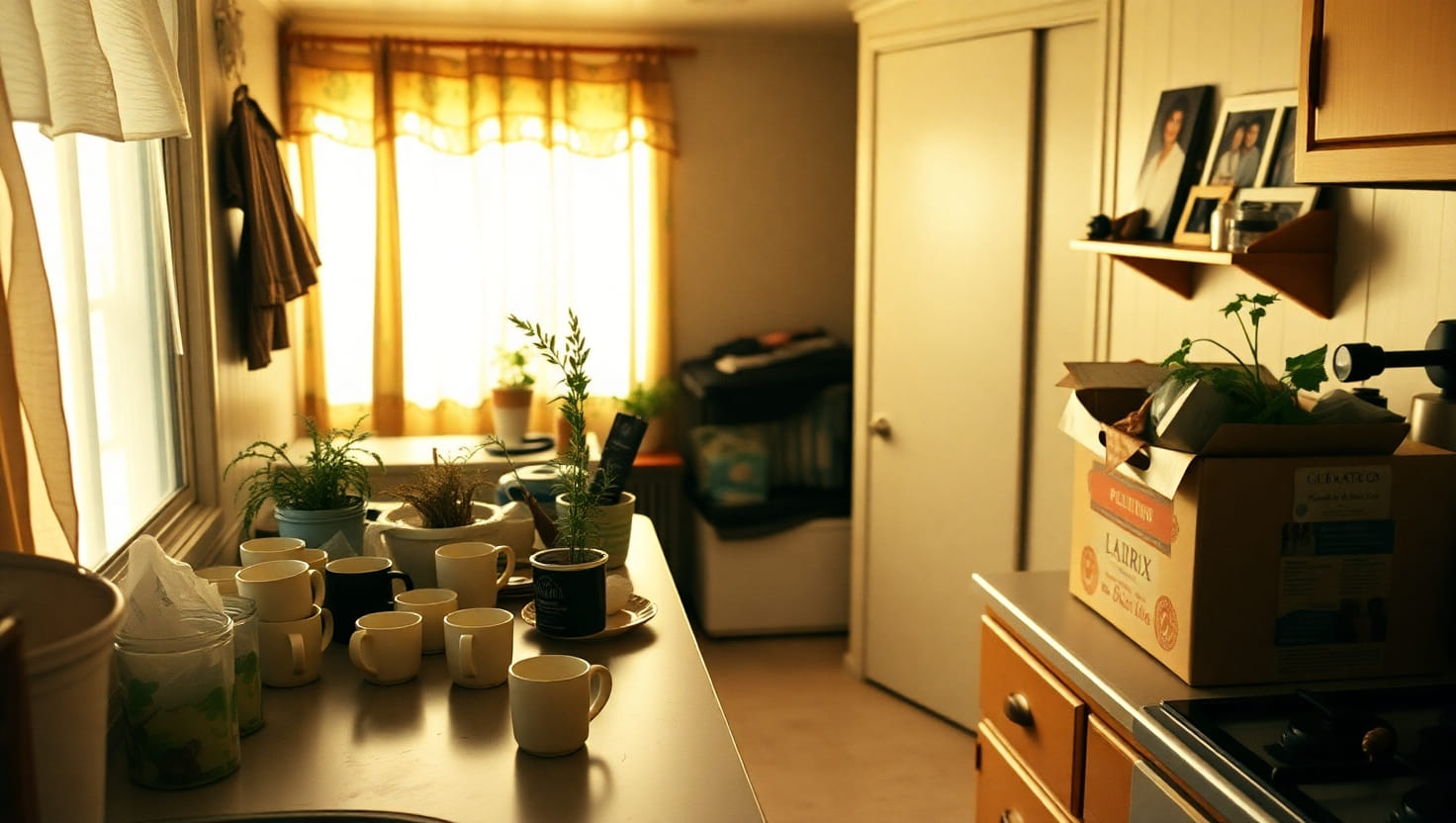
Accumulation can be neutral or even comforting. Books you love. Tools you use. Items that support daily life. These may take up space, but they don’t usually generate tension.
Clutter, on the other hand, is accumulation without clarity. Items stay because no decision has been made yet, or because making the decision feels too costly. It’s the unresolved nature of clutter that creates overwhelm.
When you’re overwhelmed by clutter, it’s often because too many items are in a limbo state. They aren’t clearly wanted, clearly useful, or clearly finished with. They sit between categories, demanding attention without offering resolution.
This distinction matters because it changes how you look at your space. Instead of seeing “too much,” you start seeing “too much undecided.” That’s a different problem, and a gentler one.
Undecided items aren’t a moral issue. They’re a sign that time, energy, or emotional clarity hasn’t been available yet. Seeing clutter this way can reduce the pressure to minimize everything and instead focus on restoring a sense of clarity over time.
Clutter feels heavy because it asks questions. Accumulation feels neutral because the questions have already been answered.
How decision fatigue feeds clutter overwhelm
Every item in a cluttered space represents a past decision that was deferred. When those deferrals pile up, they create a backlog of choices waiting to be made.
Decision fatigue sets in when the number of choices exceeds your available mental energy. At that point, even small decisions feel draining. Choosing where to put one item can feel as hard as making a major life choice.
This is why being overwhelmed by clutter can make you feel strangely frozen. The brain recognizes that engaging will require a series of decisions, and it knows it doesn’t have the capacity to make them well.
So it delays again. And again. Each delay adds another item to the queue, increasing the future load. The overwhelm grows not because you aren’t deciding, but because you’re protecting yourself from overextension.
Understanding this cycle removes a lot of self-blame. Avoidance isn’t the cause of clutter overwhelm. It’s the result of decision fatigue that hasn’t been acknowledged.
When decision-making capacity is restored elsewhere in life, clutter often becomes easier to approach without's forcing. The task itself hasn’t changed, but your relationship to choice has.
Seeing clutter through the lens of decision fatigue reframes it as a capacity issue, not a character flaw. It explains why rest, stability, and clarity often precede lasting change.
Why all-or-nothing thinking makes clutter heavier
Clutter becomes overwhelming faster when it’s framed as a total problem. The idea that the whole space needs attention, or that nothing counts unless everything is addressed, raises the emotional stakes immediately.
All-or-nothing thinking leaves no room for partial relief. It turns any effort short of completion into failure, which makes starting feel pointless. The result is often paralysis.
This mindset is rarely chosen intentionally. It develops from exposure to dramatic transformations and simplified narratives about change. Those stories compress time and effort, making anything slower feel inadequate.
When you’re overwhelmed by clutter, the thought of doing all of it can crowd out the possibility of doing any of it. The task becomes so large that it no longer feels real or approachable.
What gets lost here is the value of incremental shifts. Not as a strategy, but as a lived experience. Small changes can still alter how a space feels, even if they don’t resolve everything.
Letting go of all-or-nothing framing doesn’t mean lowering standards. It means allowing the environment to improve in ways that are proportionate to your current capacity.
When the pressure to finish disappears, engagement often becomes possible again. The space no longer demands everything at once. It becomes something you can relate to gradually, without the constant sense of being behind.
The quiet grief that can live inside clutter
Some clutter carries emotional weight because it’s tied to loss, change, or unrealized versions of life. Items connected to past roles, relationships, or plans can linger long after their context has shifted.
Being overwhelmed by clutter in these cases isn’t about disorganization. It’s about grief that hasn’t had a clear outlet. Letting go of objects can feel like letting go of parts of identity, or acknowledging that certain chapters are truly over.
This kind of clutter often sits untouched, not because it’s unimportant, but because it’s too important. The items act as placeholders for feelings that haven’t been fully processed yet.
Traditional decluttering advice tends to push action before acknowledgment. But without recognition of the emotional layer, action can feel abrupt or even unsafe.
It’s okay for some things to stay simply because you’re not ready to decide yet. Readiness isn’t a deadline. It’s a state that emerges when enough internal space has been created.
Noticing the presence of grief doesn’t require you to do anything with it. It simply explains why certain areas feel heavier than others.
When clutter is holding emotion, patience often does more than pressure. Over time, as life continues to shift, the weight of those items can change too.
How clutter erodes rest even when nothing is happening
One of the quiet effects of clutter is how it interferes with rest. Even when you sit down, even when the house is quiet, the presence of unresolved space can keep part of your attention engaged.
When you’re overwhelmed by clutter, rest often becomes conditional. You tell yourself you’ll relax after things are handled, or once the space looks better. Until then, your body may pause, but your mind doesn’t fully follow.
This happens because clutter signals unfinished business. The brain interprets visual disorder as a cue to stay alert, scanning for what still needs attention. It’s subtle, but persistent.
Over time, this can make your home feel less restorative. Not stressful in an obvious way, but never fully settling either. You might notice difficulty concentrating, a vague sense of irritability, or the feeling that you can’t quite land.
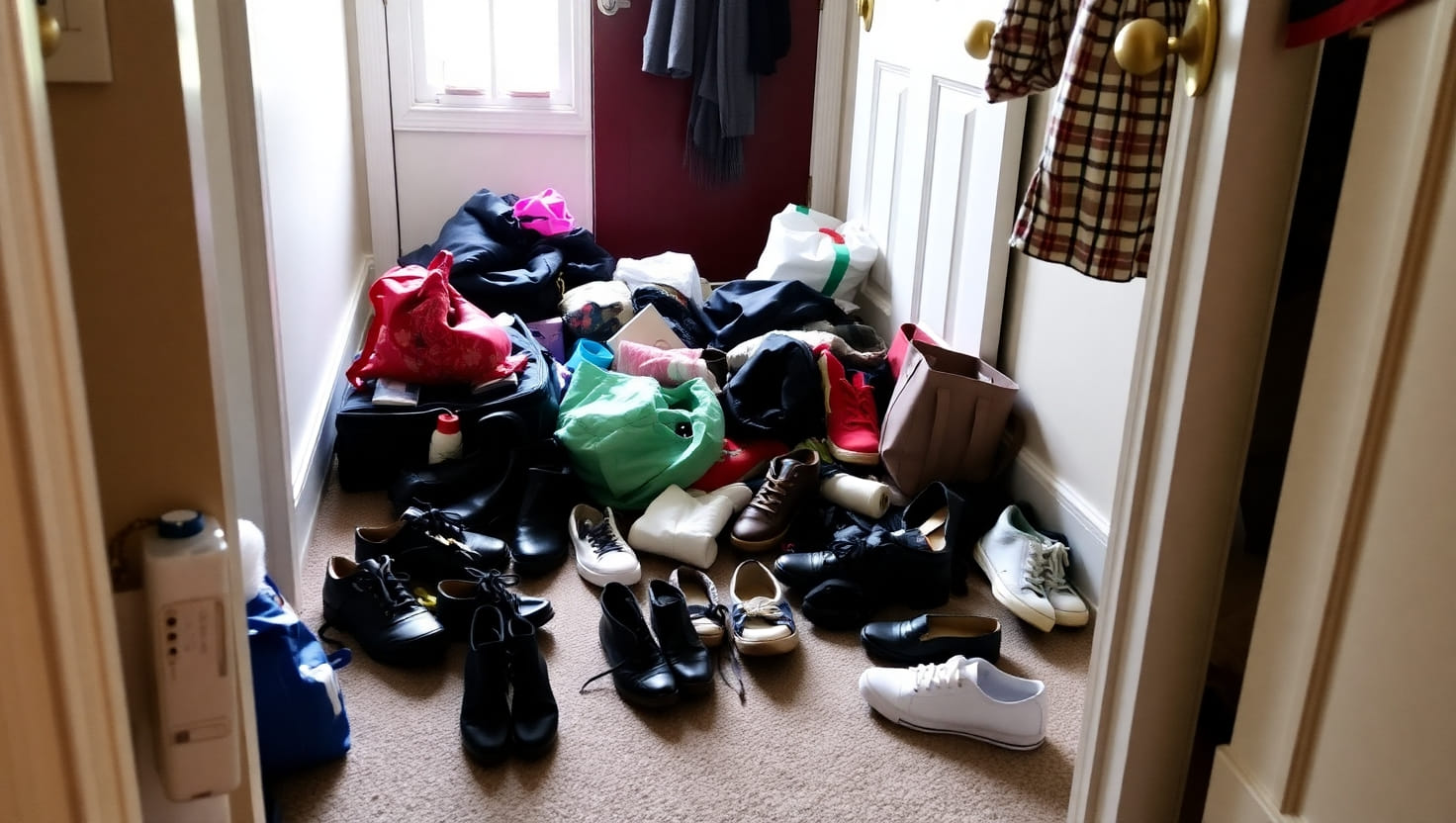
What’s important here is that this response is automatic. You’re not choosing to be on edge. Your system is responding to an environment that suggests ongoing demands.
Understanding this can bring a bit of relief. The fatigue you feel isn’t because you’re bad at resting. It’s because rest has been sharing space with unresolved signals for too long.
Clutter doesn’t have to be extreme to affect rest. Even small pockets can create that low-level vigilance. Noticing this connection helps explain why the desire for a calmer space is often about wanting deeper rest, not just visual order.
Why advice overload can worsen clutter overwhelm
When you’re overwhelmed by clutter, it’s common to look for guidance. Unfortunately, advice itself can become another layer of noise.
Different methods offer different rules, timelines, and definitions of success. Instead of clarity, you end up holding conflicting instructions in your mind. The clutter problem expands to include deciding how to even approach the clutter.
Advice overload increases cognitive load. Each suggestion adds another decision point. Should you sort by category or by room. Keep one box or four. Start small or go big. The brain, already tired, steps back again.
This is why consuming decluttering content can sometimes make things feel worse. The gap between where you are and what’s being described starts to feel larger, not smaller.
There’s also an unspoken comparison that creeps in. Even gentle advice can trigger the sense that others are managing this better. That perception adds pressure, which makes engagement harder.
It’s not that advice is wrong. It’s that too much of it, at the wrong time, can overwhelm an already overloaded system.
Sometimes the most supportive thing isn’t another strategy, but a pause from strategies altogether. Letting the noise settle can restore enough clarity for your own instincts to resurface.
When advice stops feeling helpful, it’s often a sign that your capacity is asking for quiet first, not instruction.
The role of self-trust in living with clutter
Clutter overwhelm often chips away at self-trust. Each postponed decision can feel like evidence that you don’t follow through, even when postponement was the wisest choice at the time.
Over time, this can create hesitation. You may doubt your ability to decide well, which makes decisions feel heavier than they need to be. The clutter then reinforces that doubt, creating a loop.
When you’re overwhelmed by clutter, rebuilding self-trust is often more important than removing items. Trust grows when decisions feel aligned, not rushed or forced.
This doesn’t mean every choice has to be perfect. It means giving yourself room to decide at a pace that respects your energy. When decisions are made without pressure, confidence tends to follow naturally.
Self-trust also includes trusting your sense of timing. Knowing when not to decide is a form of wisdom, not avoidance. Many items become clearer with time, context, or life changes.
As trust returns, clutter often feels less intimidating. The space hasn’t changed yet, but your relationship to it has. You’re no longer bracing for self-judgment with every glance.
Clutter loses some of its power when you stop using it as a measure of competence. In that space, decisions can eventually happen with more ease.
Why clutter can persist even after life calms down
It’s common to expect clutter to resolve itself once a busy or difficult season ends. When that doesn’t happen, frustration can set in.
The reason clutter often persists is that it formed under different conditions. The habits, shortcuts, and holding patterns that made sense during high-demand periods don’t automatically unwind when life slows.
When you’re overwhelmed by clutter after things have stabilized, it can feel confusing. You finally have a bit of space, yet the environment still reflects strain.
This mismatch can trigger impatience. You may feel like you should be able to handle it now. But capacity doesn’t rebound instantly. Recovery takes time, and so does reorienting your space.
Clutter also carries momentum. Systems that broke down don’t repair themselves without attention, even when energy returns. That doesn’t mean something is wrong. It means the environment hasn’t caught up yet.
Seeing clutter as a lagging indicator can help. It’s showing you where life once asked more than you could give, not where you currently stand.
Allowing for that lag reduces pressure. It gives you permission to approach the space gradually, without treating it as overdue work that should have already been finished.
Making room for a different relationship with clutter
At some point, many people realize that the goal isn’t a perfectly ordered home. It’s a relationship with their space that feels supportive rather than draining.
When you’re overwhelmed by clutter, shifting the relationship often matters more than changing the amount. That shift starts with how you interpret what you see.
Instead of asking why the clutter is still there, you might notice how it affects you. Where does it create tension. Where does it not. Which areas feel heavy, and which feel neutral.
This kind of noticing doesn’t demand action. It builds awareness. Awareness creates choice.
A different relationship with clutter is quieter. It’s less about fixing and more about understanding. Less about timelines and more about responsiveness.
Over time, this approach tends to lead to more sustainable change, even if that change is slow. Decisions come from clarity instead of pressure.
You don’t need to resolve everything to feel better in your space. Sometimes relief comes from knowing that the overwhelm makes sense, and that you’re allowed to meet it thoughtfully.
Clutter doesn’t have to be an ongoing battle. It can become a conversation you return to when you’re ready, without urgency, and without turning it into a measure of your worth.
When decluttering starts to feel possible again
For many people, clutter doesn’t shift because they finally find the right rule. It shifts because something inside settles first. The pressure eases. The timing changes. The work stops feeling like a referendum on who they are.
There often comes a quiet moment where you’re no longer trying to “get it done,” and instead start wondering what might actually support you long-term. Not perfectly. Just sustainably.
That’s usually the point where different kinds of stories become relevant. Not dramatic transformations, but steady ones. The kind that unfold slowly, with room for missteps, pauses, and real life woven in.