Overwhelmed by Stuff in My House: When Your Home Feels Heavier Than Your Life
A calm, pressure-free look at why clutter can feel so overwhelming—and how to understand that feeling without rushing to fix it.
Being overwhelmed by stuff in my house isn’t something that happened all at once. It crept in quietly, through everyday life, until the rooms I lived in started to feel harder to move through—not just physically, but mentally too. If you’re here, there’s a good chance you recognize that feeling.
This isn’t an article about getting rid of everything you own. It’s not a checklist, and it’s not a push to finally “deal with it.” It’s a slower look at why the presence of stuff can feel so heavy, even when nothing is technically wrong.
You don’t need to be motivated while you read this. You don’t need a plan. You’re not behind for feeling this way. We’re just naming what’s happening, in plain language, so it’s easier to stay with your own experience instead of fighting it.
When Your House Starts to Feel Like Too Much
Being overwhelmed by stuff in my house didn’t mean the house was especially messy. It meant that every surface seemed to ask something of me. A stack of papers wanted decisions. A chair covered in clothes wanted time. Even rooms I wasn’t using carried a low-level sense of responsibility.
This kind of overwhelm often comes from accumulation without pause. Life keeps moving—work, family, changes, tired days—and objects quietly settle in. Nothing dramatic happens. There’s no single moment where it all tips over. Instead, the house slowly fills with unfinished stories.
What makes this hard is that the overwhelm isn’t just visual. It’s cognitive. Each item represents a choice that hasn’t been made yet, and your brain keeps a subtle tally. Even when you’re resting, that tally doesn’t fully disappear.
This is why simply “cleaning up” rarely solves the feeling. You can put things away and still feel weighed down. The issue isn’t effort or discipline. It’s the constant background noise of unresolved decisions.
Noticing this is important. It explains why the overwhelm feels so persistent—and why it’s not a personal failing.
Why Clutter Feels So Loud When You’re Already Tired
Most people don’t become overwhelmed by stuff in their house during calm, spacious seasons of life. It shows up when energy is already thin. When you’re tired, your tolerance for extra input drops, and clutter is pure input.
Every object competes, even quietly, for a bit of attention. When you have the capacity, that competition barely registers. When you don’t, it becomes exhausting. The same pile that once felt neutral can suddenly feel unbearable.
This is why overwhelm often spikes during transitions. Busy work seasons, health changes, caregiving, emotional stress, or even just long-term mental load can all lower your buffer. The house hasn’t changed, but your ability to carry it has.
There’s a tendency to interpret this as a problem with motivation. In reality, it’s often a problem of capacity. When capacity shrinks, excess becomes visible.
Understanding this can soften the self-talk that often appears. You’re not failing at keeping up. You’re responding normally to too much stimulus at once.

The goal here isn’t to push through exhaustion. It’s to recognize that overwhelm is information, not a verdict on how you’re doing.
The Emotional Weight Hidden Inside Everyday Objects
Being overwhelmed by stuff in my house was never just about the stuff. Many objects carried emotions I hadn’t sorted through. Gifts tied to relationships. Clothes tied to past versions of myself. Projects that represented good intentions but no longer fit.
These items take up more space than they appear to. They ask emotional questions, not just practical ones. Do I still need this? Who am I if I let this go? What does keeping it say about me?
When a house holds a lot of unresolved identity, it can feel strangely heavy to be in. You might avoid certain areas, not because they’re messy, but because they stir something uncomfortable.
This is why rushing decluttering can backfire. Moving too fast through emotionally loaded items can create more tension, not less. The overwhelm doesn’t disappear—it just shifts.
There’s nothing wrong with noticing that some things feel harder to deal with than others. That awareness is part of easing the load, even before anything changes physically.
Naming the emotional layer doesn’t mean you have to process it all now. It simply explains why the experience is more complex than it looks.
How Decision Fatigue Builds Up Room by Room
One of the least visible reasons people feel overwhelmed by stuff in their house is decision fatigue. Every object that doesn’t have a clear place or purpose requires a tiny mental choice. One choice isn’t a problem. Hundreds, repeated daily, are.
Your brain treats these micro-decisions as work. Even if you’re not consciously deciding anything, the open loops stay active. Over time, this creates a background sense of pressure that’s hard to explain but very real.
Rooms with the most mixed-use items often feel the worst. A kitchen counter holding mail, appliances, and random objects doesn’t just look cluttered—it represents multiple unfinished decisions living in the same space.
This is also why overwhelm can feel immediate when you walk into certain rooms. Your brain knows, before you do, how much thinking is required there.
The important thing to notice is that this fatigue isn’t solved by willpower. It’s not about trying harder to make decisions. It’s about reducing how many decisions are being asked of you at once.
For now, simply recognizing decision fatigue as part of the overwhelm can bring a small sense of relief.
Why Wanting Less Isn’t the Same as Wanting Empty
When I was overwhelmed by stuff in my house, I thought the solution must be wanting less in an extreme way. Minimalism felt like the implied answer, even if it didn’t actually fit my life.
But wanting less pressure is not the same as wanting an empty home. Most people don’t crave blank rooms. They crave ease. They want their space to support them instead of constantly asking something from them.
Confusing these two ideas can create resistance. If the only imagined solution feels too drastic, it’s easier to stay stuck. The overwhelm remains, and so does the fear of what change might require.
There’s a wide middle ground between keeping everything and getting rid of almost everything. That middle ground is where most sustainable relief lives, even if it’s rarely talked about.
Understanding this can soften the internal standoff many people feel. You don’t have to become a different kind of person to want your house to feel lighter.
At this point, it’s enough to know that the feeling of overwhelm is pointing toward a need for gentler support, not more pressure.
The Quiet Guilt That Comes With Not “Keeping Up”
When you’re overwhelmed by stuff in your house, there’s often a quiet layer of guilt underneath the surface. Not loud guilt. Not dramatic guilt. Just a steady sense that you’re behind on something you’re supposed to be managing.
This guilt doesn’t usually come from anyone saying you’ve failed. It comes from expectations absorbed over time. Homes are supposed to be maintained. Adults are supposed to stay on top of their things. If clutter builds up, it can feel like evidence that you missed something.
What makes this especially heavy is that the guilt is vague. There’s no clear task that resolves it. You can tidy for an hour and still feel it. You can ignore the house for a day and feel it sharpen.
This emotional background noise is exhausting because it never fully turns off. Even when you’re doing something unrelated, part of your attention is pulled back toward the house and what it represents.
Seeing this guilt for what it is—a learned pressure, not a personal truth—can loosen its grip slightly. You don’t have to argue with it. Just noticing that it’s there, and that it’s common, can make the overwhelm feel less isolating.
How Overwhelm Changes the Way You See Your Space
One subtle effect of being overwhelmed by stuff in your house is that your perception shifts. You stop seeing rooms as places to live and start seeing them as problems to solve. The house becomes a list instead of a container for daily life.
This shift often happens slowly. At first, you notice a few areas that need attention. Over time, those areas multiply. Eventually, the whole house can feel like a single, ongoing project that never quite moves forward.
When this happens, it’s hard to rest at home. Even moments meant for downtime can feel provisional, like you’re borrowing space instead of inhabiting it. The environment doesn’t signal ease, so your body stays slightly alert.
This isn’t because you’re doing something wrong. It’s because environments shape nervous systems. A space full of reminders and unfinished signals keeps you oriented toward effort.
Understanding this can explain why the overwhelm follows you from room to room. It’s not about the specific items. It’s about how the space is communicating with you.
Why Advice Often Makes the Feeling Worse
Many people who feel overwhelmed by stuff in their house also feel overwhelmed by advice. There’s no shortage of systems, methods, and rules designed to fix the problem quickly. For someone already stretched thin, that can be too much.
Advice often assumes readiness. It assumes you have the energy to make decisions, the time to follow steps, and the emotional space to let things go. When those assumptions don’t match reality, the advice can feel like pressure.
This mismatch can create a loop. You seek help because you’re overwhelmed. The help feels overwhelming too. You pull back, and the original problem remains.
It’s not that the advice is wrong. It’s that timing matters. Strategies land differently depending on where you are cognitively and emotionally.
Recognizing this can reduce self-blame. If nothing has “worked” yet, it may not be because you haven’t tried hard enough. It may be because you were being asked to operate from a place you weren’t actually in.
The Difference Between Mess and Mental Load
Not all clutter creates the same kind of stress. Being overwhelmed by stuff in your house is less about how much you have and more about how much mental load your belongings create.
Some items are easy. They’re used often, stored clearly, and don’t require thought. Others are heavy. They’re rarely used, emotionally complicated, or don’t have a clear role anymore.
A house can look relatively tidy and still feel overwhelming if it’s full of mentally heavy items. Conversely, a house can look imperfect and still feel calm if most things feel settled.
This distinction matters because it shifts the focus away from appearances. The goal isn’t visual perfection. It’s reducing the number of things that ask something of you when you encounter them.
You don’t have to identify all of those things right now. Just knowing that mental load exists—and that it’s a real form of weight—can help you understand your experience more accurately.
Letting the Feeling Exist Without Fixing It Yet
There’s often an impulse to resolve overwhelm as soon as it’s named. To turn insight into action immediately. When you’re overwhelmed by stuff in your house, that impulse can actually add pressure.
Sometimes the most supportive thing is to let the feeling exist without demanding a response. To acknowledge that the house feels like too much right now, and that this makes sense given everything else you’re carrying.
This isn’t about giving up. It’s about creating a pause. A space where the problem isn’t growing because you’re fighting it internally.
Allowing this pause can change your relationship with the house. Instead of seeing it as something you need to conquer, it becomes something you’re in conversation with.
Nothing has to happen next. The awareness itself is already doing quiet work in the background, even if you can’t see it yet.
When Your Home Stops Reflecting Who You Are Now
A common but rarely named part of being overwhelmed by stuff in your house is the sense that your space is slightly out of sync with your current life. Not dramatically wrong. Just outdated in quiet ways.
Homes tend to hold onto earlier versions of us. Objects arrive during different seasons—careers, relationships, phases of parenting, interests that once mattered. When life shifts but the environment doesn’t, a subtle tension can form.
You may notice this as a low-level discomfort rather than a clear thought. Rooms feel fine, but not quite right. Drawers hold things you don’t reach for anymore. Closets reflect priorities that have changed.
This mismatch can create emotional drag. Being surrounded by reminders of who you used to be can make it harder to feel settled as who you are now. The house isn’t wrong, but it’s slightly behind.
This is not a call to reinvent your home. It’s simply an explanation for why overwhelm can linger even when nothing is obviously broken.
Noticing that your space may need time to catch up to you—not the other way around—can soften the pressure to fix everything immediately.
Why Starting Feels So Much Harder Than It “Should”
People who are overwhelmed by stuff in their house often wonder why starting feels nearly impossible. The assumption is that beginning should bring relief. Instead, it can feel paralyzing.
This happens because starting isn’t one action. It’s a chain of decisions, emotional exposures, and energy output. When you’re already depleted, even the idea of that chain can feel like too much.
There’s also the fear of starting wrong. Of touching the wrong area first. Of making a mess that’s bigger than what you began with. These concerns don’t always show up as clear thoughts, but they influence avoidance.
What looks like procrastination is often self-protection. Your system is trying to prevent overload, not sabotage progress.
Understanding this can change the tone of your internal dialogue. Instead of asking why you won’t start, you might notice that something in you is asking for a different entry point.
That awareness doesn’t create action yet. It simply reduces friction around the idea of action, which matters more than it sounds.
The Pressure to Do It “All at Once”
One reason overwhelm stays stuck is the unspoken belief that decluttering has to be comprehensive. That if you begin, you should finish. That partial change doesn’t count.
This belief turns every small attempt into a high-stakes event. If you only have limited time or energy, starting feels pointless. The imagined standard is too large.
Being overwhelmed by stuff in your house often comes with this all-or-nothing framing, even if you don’t consciously agree with it. It lives in the background, shaping what feels acceptable.
The result is inertia. Not because you don’t care, but because the imagined scope is unrealistic for your current capacity.
Simply noticing this pressure can be enough to loosen it slightly. You don’t have to replace it with a new rule. You don’t have to decide what “counts.”
Letting go of the idea that change must be complete to be valid creates more internal space than any specific strategy ever could.
How Comparison Adds to the Weight
Overwhelm rarely exists in isolation. It’s often intensified by comparison—other homes, other people, other standards that seem easier for everyone else.
When you’re overwhelmed by stuff in your house, these comparisons can feel especially sharp. Social media, visits to other homes, even offhand comments can trigger a sense of inadequacy.
The comparison usually skips context. You don’t see the full picture of anyone else’s life, energy levels, or support systems. You only see the surface result.
Still, the impact is real. Comparison adds an emotional layer to an already heavy situation. It turns a neutral problem into a personal one.
Recognizing comparison as an external pressure—not an internal truth—can help separate your actual experience from the story wrapped around it.
You don’t need to correct the comparison or replace it with positivity. Just noticing that it’s contributing to the weight can make the overwhelm feel more manageable.
Staying With the Question Instead of Forcing an Answer
At this point, being overwhelmed by stuff in your house might feel clearer, even if nothing has changed physically. That clarity matters more than it seems.
Sometimes the most supportive stance is to stay with the question rather than rush toward an answer. To let the awareness settle without immediately translating it into action.
This creates room for timing. For your capacity to shift naturally. For insight to deepen without pressure.
The house doesn’t need to be resolved right now. You’re allowed to understand your experience before you respond to it.
Holding that permission gently—without demands or deadlines—keeps the situation from tightening further.
For now, it’s enough to know that the overwhelm makes sense, and that you don’t have to outpace yourself to make it go away.
When Small Amounts of Space Start to Matter More
As overwhelm lingers, many people notice something quiet but important: even small pockets of space begin to feel meaningful. A cleared corner. A drawer that closes easily. A surface that stays open for a while.
When you’re overwhelmed by stuff in your house, these moments can feel disproportionately relieving. Not because they solve the whole problem, but because they offer brief evidence of ease.
This matters because it shifts the internal focus. Instead of measuring progress by how much is gone, attention moves toward how the space feels to be in. Relief becomes the signal, not completion.
Often, these small spaces aren’t created deliberately. They happen accidentally—during a quick reset or a necessary clean. But the body notices them immediately.
That noticing can gently recalibrate what you want from your home. Not perfection. Not emptiness. Just fewer points of friction.
You don’t need to act on this insight yet. Letting yourself register what feels supportive helps your nervous system learn what kind of change actually helps, instead of what you think you’re supposed to aim for.
Why Some Areas Feel Impossible to Touch
In most homes, overwhelm isn’t evenly distributed. Certain areas feel manageable, while others feel completely off-limits. When you’re overwhelmed by stuff in your house, those off-limits zones often carry extra meaning.
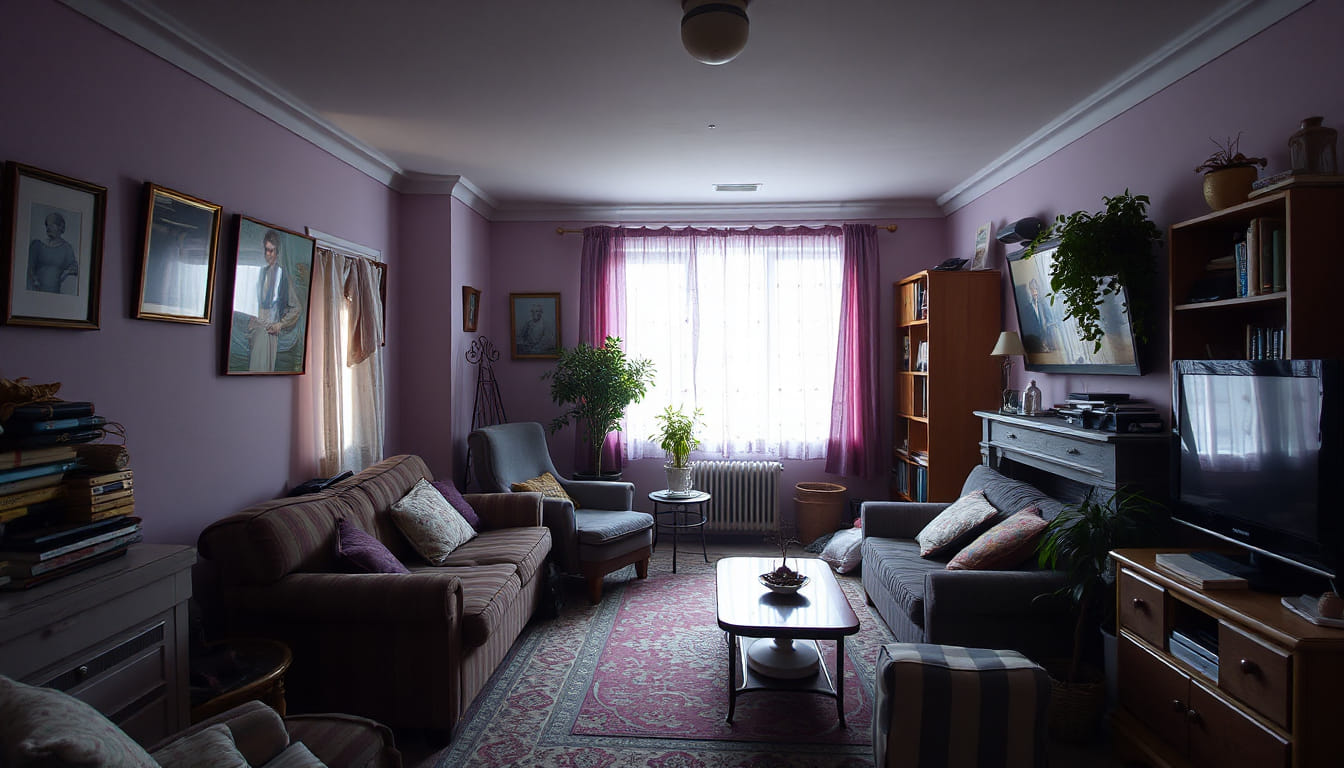
They might hold decisions you’ve been postponing for years. Items connected to loss, guilt, or old plans. Or simply too many categories mixed together to make sense of easily.
Avoidance here isn’t laziness. It’s information. Your system recognizes that these areas require more energy than you currently have.
The problem arises when avoidance turns into self-criticism. When untouched spaces start to feel like proof of failure instead of protected boundaries.
Reframing these areas as “high-demand zones” instead of problem spots can soften that internal pressure. It acknowledges reality without forcing readiness.
For now, it’s enough to know that not everything needs equal attention. Some areas can wait without anything being wrong.
The Subtle Relief of Noticing What Already Works
When overwhelm dominates, it’s easy to overlook what’s already functioning well. Yet most homes—even overwhelming ones—contain systems that quietly work.
You might have a drawer that never gets cluttered. A routine that keeps one area relatively calm. A storage choice that still makes sense years later.
Being overwhelmed by stuff in your house doesn’t erase these successes. It just makes them harder to see.
Noticing what works isn’t about gratitude or positivity. It’s practical. It shows you where ease already exists, without effort or forcing.
These working areas often align with how you naturally live, not how you think you should live. They offer clues about what kind of support your space responds to.
Letting yourself acknowledge this can reduce the sense that everything is broken. It rarely is. More often, it’s uneven.
When Decluttering Stops Feeling Like Self-Improvement
At a certain point, many people notice a shift. Decluttering stops feeling like a project meant to improve them, and starts feeling more like maintenance for comfort.
When you’re overwhelmed by stuff in your house, this shift can be subtle. The motivation changes tone. There’s less urgency, less comparison, less sense of fixing yourself.
Instead, attention moves toward reducing strain. Making daily life slightly easier. Allowing your environment to meet you where you are.
This change often reduces resistance. When decluttering is framed as self-improvement, it carries judgment. When it’s framed as care, it feels optional.
Nothing external has to change for this shift to happen. It’s an internal reorientation.
Recognizing this possibility—even faintly—can make future decisions feel less loaded, when and if they arise.
Letting Timing Be Part of the Process
One of the most stabilizing realizations for people overwhelmed by stuff in their house is that timing matters. Not everything is meant to be addressed at once, or even soon.
There are seasons when energy is available and seasons when it’s not. Ignoring that reality creates friction. Respecting it creates room.
Letting timing be part of the process doesn’t mean doing nothing forever. It means trusting that readiness changes, often quietly.
Sometimes clarity arrives before energy. Sometimes energy arrives before clarity. Neither is wrong.
For now, allowing the idea that this doesn’t have to be resolved on a schedule can bring a sense of relief.
The house isn’t a deadline. It’s a living space, adjusting alongside you.
When You Start Wondering What Would Actually Help
After sitting with all of this, it’s natural for a quieter question to emerge. Not “How do I fix my house?” but “What would make this feel lighter over time?”
That question doesn’t need an immediate answer. It’s more of an orientation shift. A sense that the problem isn’t effort, or discipline, or finding the right rule. It’s about finding an approach that respects your capacity and works with how your life actually unfolds.
If that curiosity stays with you, there are ways of exploring what makes decluttering sustainable instead of cyclical. Nothing to decide now. Just an idea to hold gently, for when you’re ready to look further.